
If you have ever stood at a forge screen in an RPG, swapping two weapons back and forth for ten minutes while the tooltip numbers blur together, you already know that figuring out how to choose RPG equipment upgrades is not really about reading the damage stat. It is about knowing which numbers actually matter for the way you play, in the build you are running, at the stage of the game you are in. After dozens of characters and more crafting benches than I want to admit, I have settled on a short comparison framework that works whether I am holding a rusty pickaxe in a survival crafting RPG or a polished blade in a dungeon crawler.
Beyond the Damage Number
Damage-per-second is the stat every game puts at the top of the tooltip, and it is the stat I have learned to read last. In my experience, a weapon with a smaller headline DPS number often plays better than the obvious pick once you factor in everything else. The trick is to look at a fixed set of dimensions every time you compare, and to weight them by how the rest of your build actually works.
Here are the dimensions I write down on my scrap-paper notebook before I commit a single upgrade material:
Effective DPS — headline damage, adjusted for any multipliers your build already grants (crit, elemental bonus, combo timers).
Weight and stamina cost — how heavy the weapon or armor feels in combat, and whether it slows your dodge, sprint, or stamina regen.
Durability and repair cost — how fast it degrades, and what it takes to keep it functional.
Crafting or upgrade cost — the materials and currency you spend to obtain the next tier, not just the tier itself.
Set bonuses and synergies — whether the piece unlocks a set effect, a class proc, or fits a synergy you are already building toward.
Maintenance burden — whether the weapon needs special ammo, fuel, sharpening stones, or cooldown management.
Most tooltips only show the first column. That is by design, because the developers want you to feel the gap between common and rare loot. As a player with limited sessions, I refuse to make an RPG equipment upgrades decision on partial information. I copy the missing columns into my notebook, and only then do I make a call. This single habit is what turned how to choose RPG equipment upgrades from a coin flip into a quiet, repeatable checklist for me.
A Simple Comparison Table for Two Upgrades
When I am genuinely torn between two pieces, I write both down side by side. The table is what makes the choice obvious, not the raw numbers.
Dimension | Iron Saber (current) | Refined Greatblade (next tier) |
|---|---|---|
Effective DPS against my main enemy | 142 | 161 |
Weight | Light, no stamina penalty | Medium, small stamina penalty on swings |
Durability | 180, cheap to repair | 240, but needs a rare whetstone |
Upgrade cost | Already paid | 6 rare ingots, 2 oils, 1 cloth |
Set bonus | None | Triggers a minor lifesteal proc with two other Refined pieces |
Maintenance | None | Needs re-oiling after long fights |
When I see it in a table, the choice usually flips. That medium weight on the Greatblade costs me a dodge roll I cannot spare, and the lifesteal proc is only worth it if I already own two other Refined pieces, which I do not yet. The answer is to wait one more tier, not to spend six rare ingots today. This is the comparison a quick tooltip glance never lets me make.
Asking Whether You Actually Need the Next Tier
Before I commit to any upgrade material, I run one blunt question through my head: do I actually need this tier right now, or am I upgrading because the new loot feels shinier than the loot I am wearing? Half the time, the honest answer is the second one.
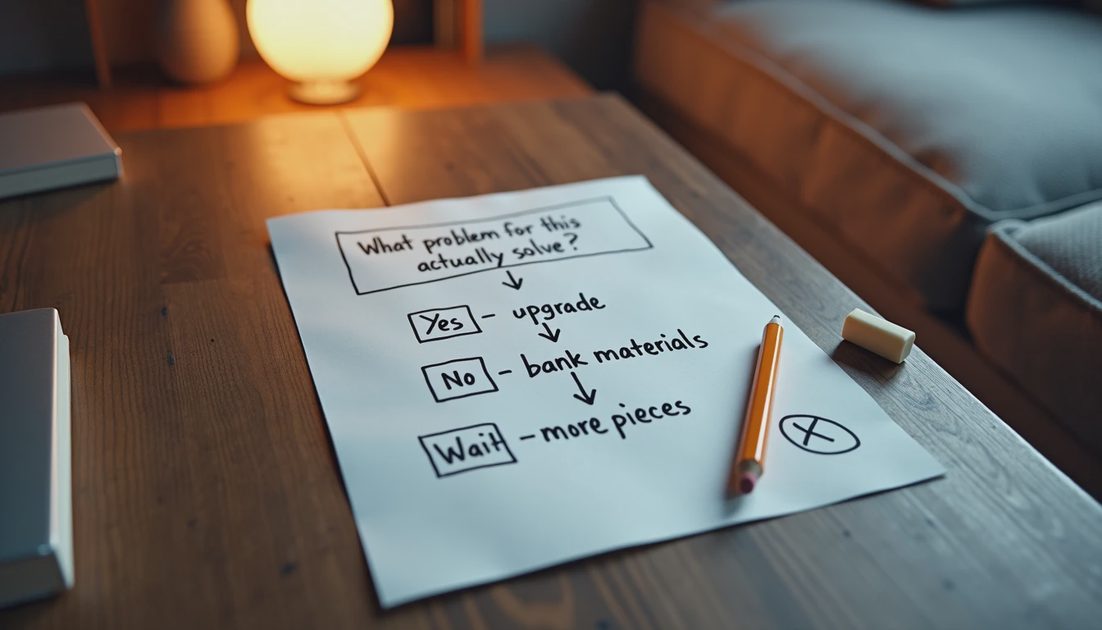
A useful upgrade is one that closes a specific gap my current gear cannot. If my character dies because enemies stun me too quickly, more damage does not fix it. If I cannot break a specific object in the world, I do not need a stronger weapon, I need the right tool tier. Don't overthink it: the upgrade that solves a problem you actually have today is almost always worth more than the upgrade that adds a number you will only notice in the damage log.
Here is the sequence I follow whenever a new piece drops:
Identify the single biggest frustration in my last two or three sessions.
Check whether the new piece addresses that frustration directly.
If it does not, keep my current gear and spend the materials elsewhere.
If it does, run the comparison table from the previous section.
Only then decide whether to commit.
That sequence has saved me more materials than any farming guide ever has. The games I enjoy most tend to throw tier after tier at you, and the temptation to keep swapping is constant. The discipline of asking "what problem does this actually solve?" turns a random chase into a focused one.
When to Skip a Tier on Purpose
Sometimes the right move is to skip an entire upgrade tier. That sounds wasteful, but in my experience the most expensive mistakes happen when you pour materials into a piece you will replace within an hour of finding the next loot drop. A short list of skip conditions:
The next tier costs rare materials I have not yet unlocked a reliable source for.
The set bonus requires three pieces I do not own yet, and finding them is not on my near-term path.
My current gear already handles every enemy I encounter comfortably.
The new piece solves a problem that does not appear until late game.
When any of those are true, I pocket the materials. The next tier, or the one after that, is where they will actually pay off.
Reading Your Build Before You Read the Tooltip
No comparison framework matters until you know what build you are actually running. A "great" weapon for one archetype can be useless for another, and games are usually quiet about this on purpose. The fix is to look at the build you have already committed to, not at the build you might switch to next week. This is where most of my bad decisions about how to choose RPG equipment upgrades have come from over the years: I compared pieces without first comparing them to the build I was actually playing.
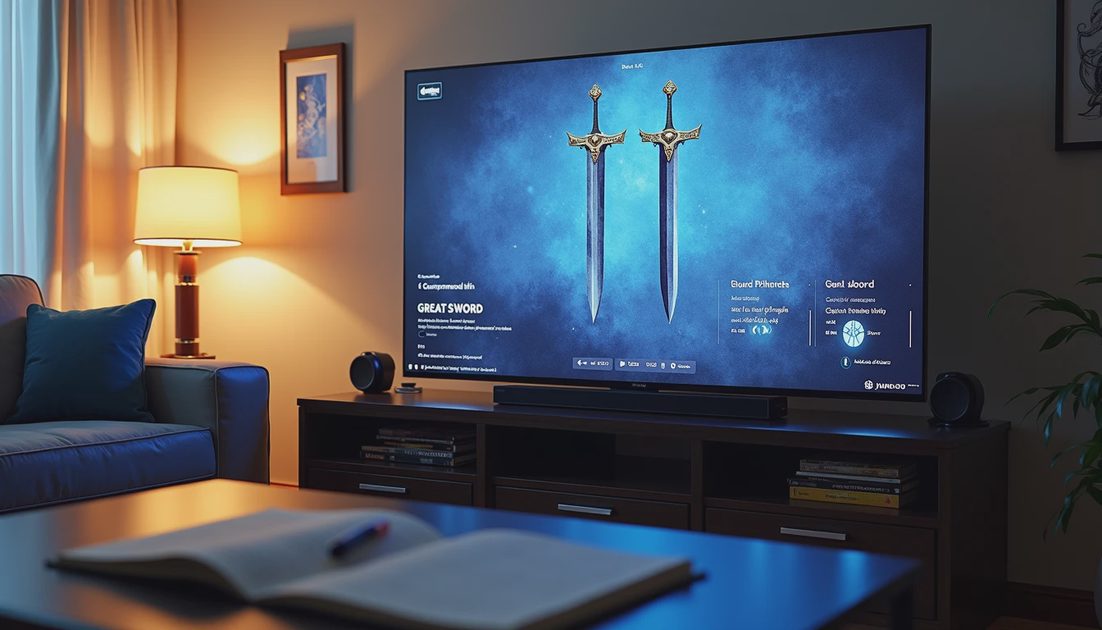
For example, in a fantasy action RPG I played recently, I had two weapons in my inventory that both passed the comparison table: a fast dagger and a slow greatsword. The greatsword had higher DPS, but my entire build revolved around fast dodges and a combo timer that only ticked during rapid strikes. The greatsword's slow swing broke my combo on every encounter. The dagger, with a smaller headline number, played twice as fast and doubled my actual damage output. The comparison table alone would have told me to take the sword. The build context told me to take the dagger.
Here is how I pressure-test a build before I trust any upgrade:
I write down the two or three mechanics my character relies on every fight.
I check whether the new weapon interrupts or extends those mechanics.
I think about whether the gear piece is doing something my skill tree already covers.
I look at the resource cost of using the new piece in a real fight, not just on paper.
That last check matters because some pieces look generous on paper but burn a resource you cannot afford to spend. A heavy armor set with great defense can feel wonderful until you realize it drains your mana pool every hit, which kills your heal, which kills the whole build.
A Workflow That Takes Five Minutes
The whole process above can be wrapped into a five-minute ritual I run every time a meaningful upgrade drops. I keep this short on purpose. The longer the checklist, the less likely I am to follow it during a weeknight session when I only have ninety minutes to play.
The sequence is simple. First, I copy the new piece's stats into my notebook next to my current gear. Second, I run the comparison table for any piece I am seriously considering. Third, I run the tier decision list: do I actually need this, or am I chasing the next number. Fourth, I check the build context: does the piece fit how I actually fight, or does it just look appealing on paper. Fifth, I commit, bank the materials, or keep farming, depending on what the previous four steps actually said.
When I started running that loop, I stopped overspending on upgrades that did nothing for me. My inventories stopped filling with half-finished upgrade paths. My builds stopped drifting every session. The pattern, applied consistently, is what turns an RPG inventory from a source of stress into a system that respects the time I have. That is the whole reason to compare upgrades carefully in the first place.