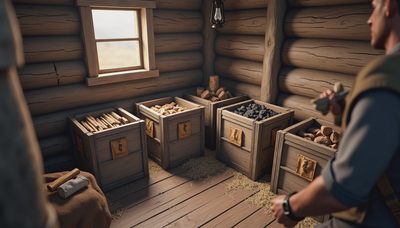
Abiotic factor classes explained for busy players: compare starting skills, choose the right background, and build a useful survivor without wasting time.
A founding note for The Practical Player. Mike Bennett, a 36-year-old product operations manager and father of two, explains why he measures gaming success by session quality rather than hours logged. He introduces the site's focus on survival crafting, RPG, simulation, and strategy games for busy adults and previews the practical content to come.
Mike Bennett shares a reusable first-two-hours framework for any survival crafting game: locate shelter, secure water and food, scout the map edges, avoid early combat, and learn one core loop. Includes a five-step ordered list, a timed pacing table, and common beginner mistakes to skip.
Mike Bennett explains how to decide what to build first in a base-building game by naming the current problem instead of copying build orders. Storage, production, and defense are compared in a decision table, with a three-question framework and a staging sequence to avoid rebuilding later.
Mike Bennett explains why beginner hoarding backfires and how to manage resources in survival games by circulating materials instead of preserving them. Covers rare wood, special seeds, and unidentified crafting parts, with a symptoms-to-causes table and a one-hour spending rule.
Mike Bennett shares a time-based framework for early survival sessions: explore in bounded fifteen-to-twenty-minute chunks, build between chunks, and head home before dark. Includes a decision matrix table, go-home triggers, and a note on fallback shelters for busy adult players.