

The most important decision in a survival game is rarely which direction to go. It is when to stop doing what you are doing and do something else. After twenty years in this genre, I can tell you that most beginner deaths are time-of-day problems: players push one more hill, grab one more node, and the sunset catches them on the wrong side of the map. If you are looking for a survival game beginner guide that respects how you actually play, start with the clock, not the compass.
I am Mike Bennett, a working father who gets most of his game time in one- and two-hour chunks after bedtime. That constraint turned out to be an advantage, because survival games are built around a rhythm of risk and retreat, and that rhythm maps neatly onto a short evening session. Once I stopped treating every moment in-game as equal, exploration and building started to feel like two gears in one machine instead of two hobbies fighting for my attention.
Why the Clock Should Drive Your Session
Every survival game has a heartbeat: the day-night cycle. It decides when danger rises, when visibility drops, and when your character needs to be somewhere safe. Players who ignore that heartbeat are not being brave; they are gambling with the session's only real currency, which is time. The players who make steady progress are the ones who plan around the cycle the way a commuter plans around traffic.
In my experience, a survival game beginner guide usually spends a lot of energy on what to craft and very little on when to stop. That is backwards for busy adults. Knowing when to head home saves your gear, your resources, and your motivation, and it costs nothing but a little discipline. I now treat the clock as the map's most important feature, and I read it before I read the terrain.
The Real Cost of Staying Out Too Long
Staying out past dark does not always kill you, and that is exactly why it is dangerous. You limp home with a cracked torch, a half-empty health bar, and a bag of resources you were too tired to sort. The next session then starts with repairs instead of progress, and the game quietly turns a fun evening into homework.
A Two-Hour Rhythm That Works on a Weeknight
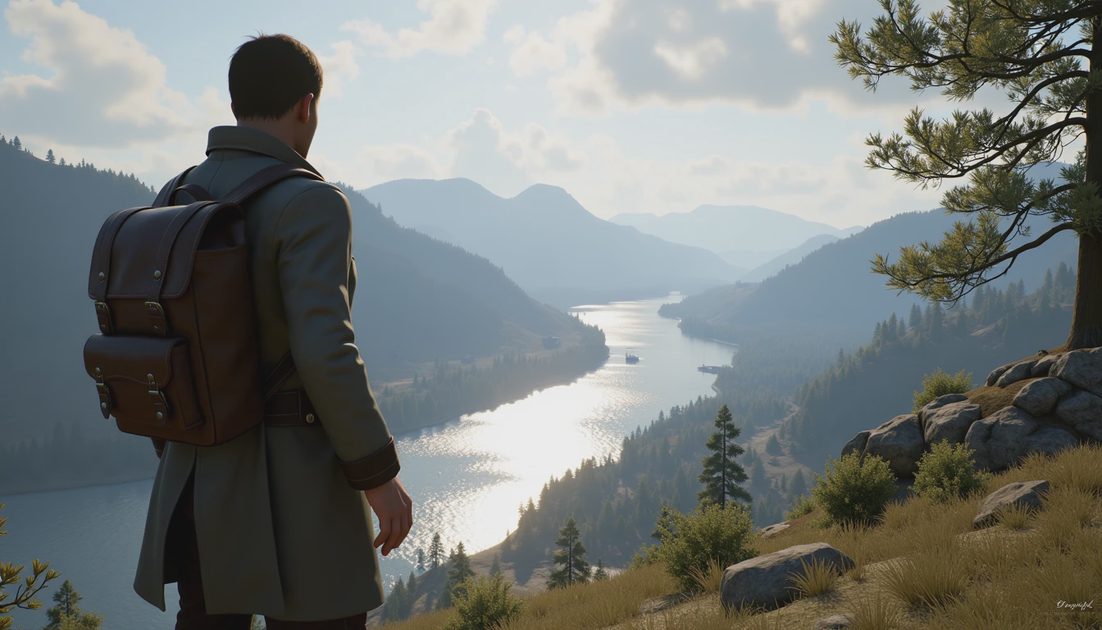
Here is the pattern I use for most of my sessions, and it works in coastal maps, forests, deserts, and any other setting the genre throws at me. I split a two-hour block into exploration chunks of fifteen to twenty minutes, and I build something in between each chunk. The building is not a break from progress; it is the point of the exploring, because a chunk of exploration only pays off when it feeds a building decision.
If this article is your survival game beginner guide for pacing, treat the rule below as the contract between you and the night. The decision matrix shows how I choose between moving, building, and heading back.
Current situation | The move | Why |
|---|---|---|
Full daylight, more than 30 minutes left | Explore in a bounded chunk | The map rewards daylight better than anything else |
A new resource or landmark found | Build a small improvement near base | Turn the discovery into capability while it is fresh |
Daylight fading, base more than 10 minutes away | Head home now | The walk back is always longer and darker than the walk out |
Inventory nearly full | Go home and unload | A full pack makes every future decision worse |
Health or supplies low | Retreat and recover | Fighting on low resources converts a setback into a restart |
The pattern underneath the table is simple: explore to learn, build to convert, and go home before the game forces you to. Most of the tension in a survival session comes from ignoring one of those three, and most of the calm comes from honoring all of them.
How I Use the Chunks
I do not time my chunks with a stopwatch. I use the game's own signals: when the sun starts its visible arc downward, I check how far I am from base, and I give myself one landmark's worth of distance to turn around. That keeps the explore-build rhythm honest without turning the evening into a spreadsheet. Don't overthink it; a rough sense of "this is half my session" beats any timer.
Reading the Signals: When Each Mode Takes Over
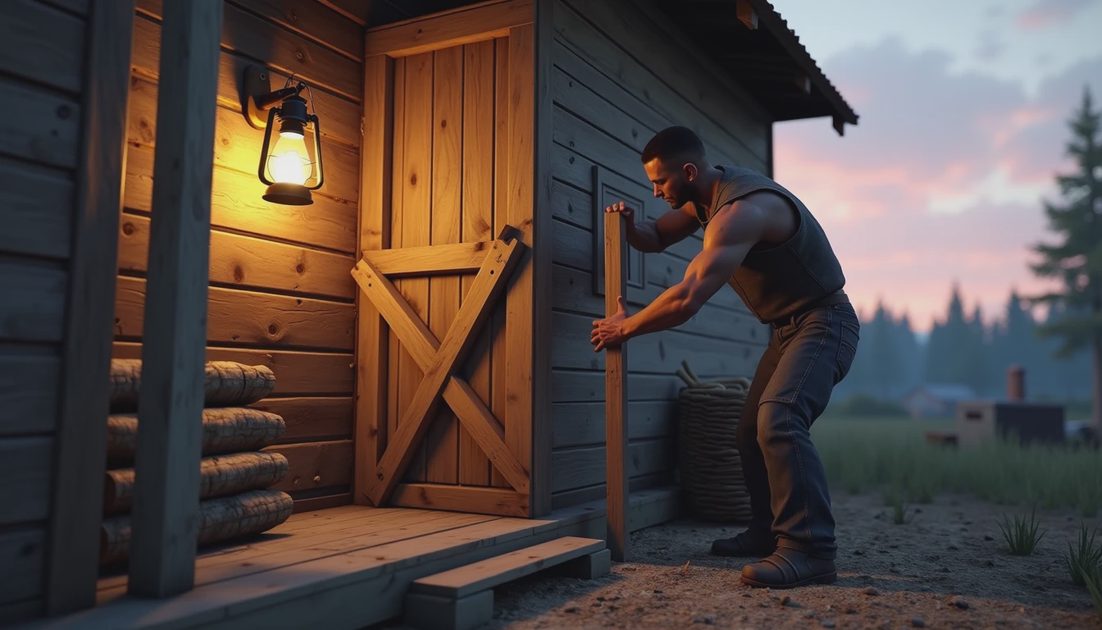
The rhythm works because it is reactive. Each phase of the session is triggered by something the game shows you, not by a schedule you imposed on it. Over time I have learned to read the three signals that move me between explore, build, and go home.
The Explore Trigger
Exploration is the right mode when the sun is high, your pack is light, and you have a question you want answered. I keep my questions small on purpose. "What is past that ridge?" is a better exploration goal than "see everything", because a bounded question gives me a natural place to stop and a reason to come back.
The Build Trigger
Building is the right mode when exploration hands you a fact you can use. A new ore deposit, a water source, a safer route back to base, these are not just sights to log; they are arguments for a specific building decision. I build in short bursts between chunks, and I always leave one improvement half-planned so the next session has an obvious starting point.
The Go Home Trigger
This is the signal most beginners ignore, so I made it a rule. The moment daylight starts to fail, I estimate the walk back and add a safety margin. If the base is more than ten minutes away in game time, I turn around immediately, even if the node in front of me is half-mined. The node will be there tomorrow. My gear, my daylight, and my next session's motivation may not be.
Here are the go-home triggers I treat as non-negotiable:
The sun is past its midpoint in the sky and I am more than a short sprint from base.
My pack is close to full and the next discovery would force a painful drop.
My health, stamina, or food stores are below what I would need to fight back.
I have already answered the question I set out to explore.
What I Do When the Plan Falls Apart
No rhythm survives contact with a surprise night storm or a patrol that cuts off my route, and I have learned not to panic when that happens. I keep one emergency plan: a fallback shelter in a pocket between my base and my usual exploration route, stocked with basic supplies. It does not need to be pretty. It needs to keep me alive until morning, and it has saved more sessions than any combat skill I own.
The broader lesson is that a ruined plan is still information. When the game surprises me, I write the surprise down in the notebook I keep beside the couch, and I fold that lesson into the next session's plan. For a survival game beginner guide to be worth your limited evenings, it has to treat setbacks as data rather than failure, and it has to trust the rhythm even when one night goes sideways. The clock will reset, the sun will rise, and the map will still be there.