I started The Practical Player because I stopped chasing the wrong metric. For years I judged my gaming hobby by hours logged, and by that measure I was losing no matter how much I played. The games that respect your time are not necessarily the shortest or the simplest ones; they are the ones that hand you a real sense of progress when all you have is one free evening. That single idea is the reason this site exists.
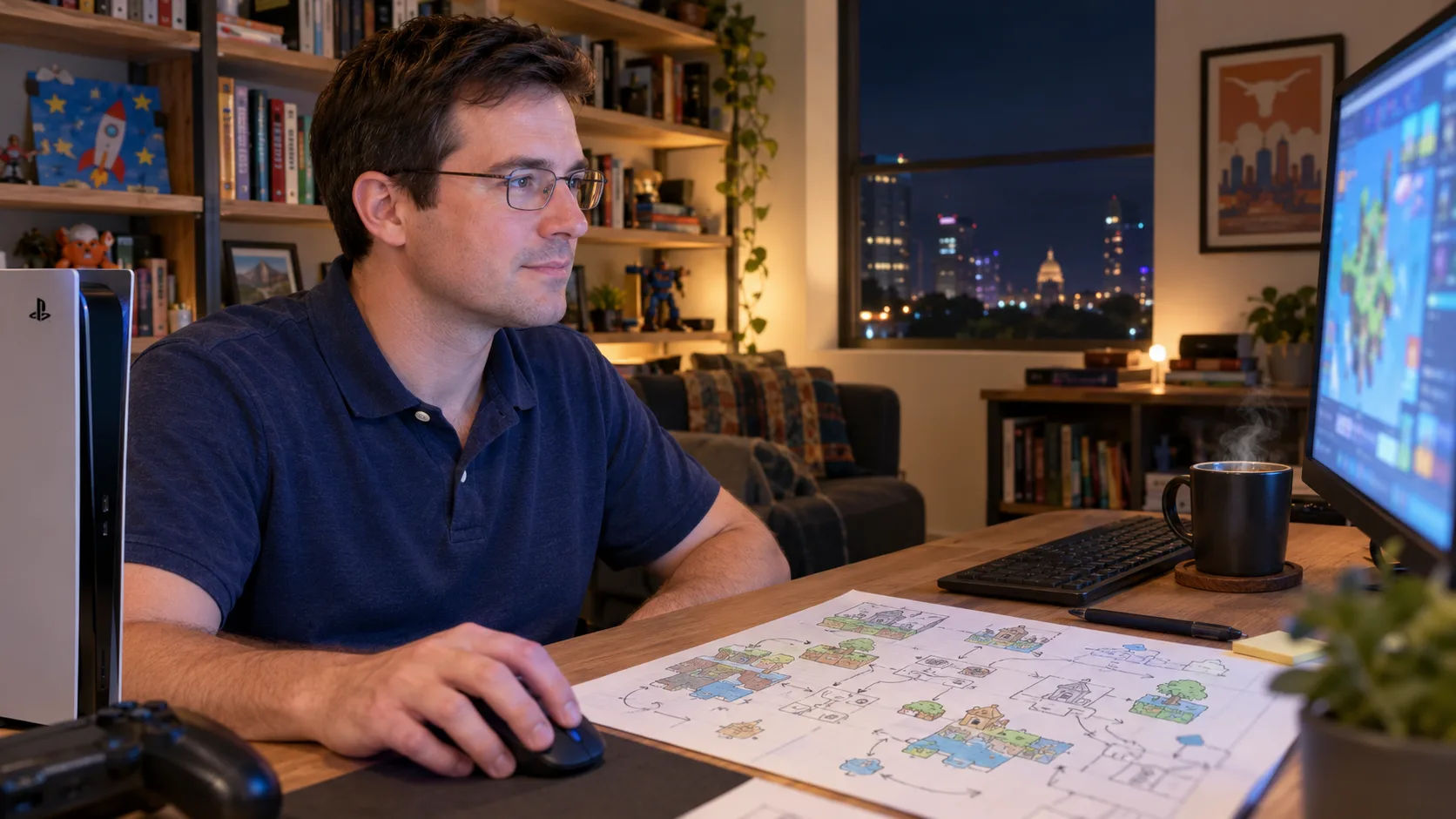
I'm Mike Bennett, 36, a product operations manager at a growing SaaS company in Austin, Texas. I have two kids, ages six and nine, roughly twenty years of gaming behind me, and a schedule that offers an hour or two on weeknights and maybe three to five hours on the weekend. I play across PC, console, and handheld setups, and I gravitate toward survival crafting, RPG, simulation, and strategy games. This site is where I work through what that kind of life means for how I pick games and how I play them. The name says it all: better game time, not more game time.
Why "Just One More Hour" Is the Wrong Fix
The trap most busy adult gamers fall into is treating the calendar as the enemy. If the kids went to bed earlier, if work stopped leaking into the evening, if the weekend were one day longer, then everything would click. More often than not, the real problem has nothing to do with the clock. It is a session without shape. When I look back at evenings that felt wasted, they were not the short ones. They were the unfocused ones where I wandered across the map, re-read the same menus, rebuilt starter tools I already had, and finally quit out of boredom rather than satisfaction.
That is why I now filter my library around games that respect your time instead of games that merely absorb it. A title can look great and still cost you the whole night before it lets you make a meaningful decision. For a working adult, that delay is not atmosphere; it is a tax on a hobby that already runs on a shortage.
The Session Paradox
Here is the strange part of getting older as a gamer: the less time I had, the pickier I got, and the pickier I got, the better my sessions became. A dense skill tree that thrilled me at nineteen feels like a second job at thirty-six unless the game explains itself quickly and rewards curiosity early. I still love depth, but I want depth that pays for itself within the first few sessions, not one that asks me to trust it for a month.
Three Signs the Game Is Fighting Your Schedule
These are the warning signs I check before I commit a weeknight to something new:
I open the save and spend the first twenty minutes remembering controls, locations, and crafting menus before I make a single meaningful decision.
The natural stopping points are placed so poorly that I keep playing past the moment I stopped having fun, just to avoid losing progress.
I cannot answer the question "what am I trying to do tonight?" before the session starts, and the game does not help me answer it once I am in.
If two of the three ring true, the game is not a fit for the way I live right now. That is not a judgment on the game; it is a judgment on the match.
What "Better Game Time" Means to Me
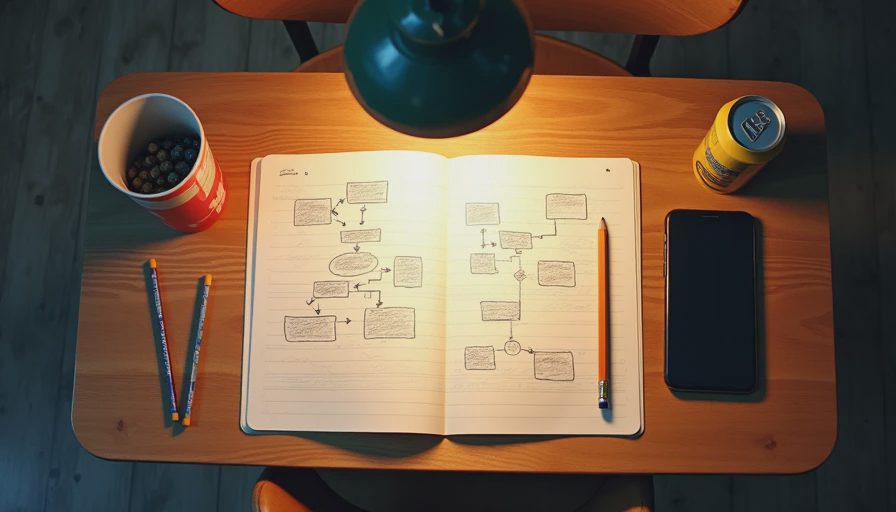
At work I run product operations, which is a polite way of saying I spend my days making loops more efficient and less wasteful. I do the same thing for my hobby, and I usually do it on paper first. Before I commit to a serious project in any game, I sketch the resource loop or base layout on scrap paper, the way I would map a workflow before proposing a change. A good session follows the same logic: set an objective, take an action, see a result, and let that result feed the next session. Better game time is simply a loop you can close in the time you actually have.
Once I started thinking in loops instead of hours, choosing what to play became an engineering question instead of an emotional one. Here is roughly how I budget a week now.
Session window | What I plan | What I deliberately skip |
|---|---|---|
Weeknight, about 45 minutes | One concrete objective, such as securing a new resource node | Wandering and exploration for its own sake |
Weeknight, about 90 minutes | Two objectives or one careful experiment with the base layout | Re-optimizing systems that already work |
Weekend block, 3 to 5 hours | One larger project plus light cleanup of small tasks | Starting a second game I will not finish |
The column on the right is the real lesson. Cutting those items is not reducing my fun; it is removing the parts of a session that leave me wondering why I bothered. Games that respect your time are the ones that let me make that trade-off myself, instead of forcing it on me through travel time, busywork, and padded systems.
What You Will Find Here
The Practical Player will cover the genres I know well and play constantly, all through the lens of a working adult with limited hours. You will get the honest version of the advice I give myself, not the version that sounds good in a forum thread.
First Hours pieces that treat the opening of a game as a solvable problem, with repeatable approaches you can apply to any new title.
Progression and systems guides for skill trees, base building, equipment, and resource flows, written for players who hate dead ends.
Session strategy for the real shape of a week, including how to spend a two-hour block and how to return to a game after a long break.
Some articles will read like field notes from the couch, because that is literally where they come from. I often pause mid-session to write a question down rather than look it up immediately, then test my guess later. Those questions are the seeds of most of what I publish here.
A Note for the Reader in the Same Boat
If you are reading this, I suspect you are the person I keep in mind while writing: someone who loves games, has a job, and has people counting on them at home. You do not need a lecture about screen time or a list of hundred-hour epics you will never finish. You need honest, practical guidance about what is worth your limited energy, and permission to stop playing things that feel like chores.
That is the deal I am making with you. No hype, no guilt, no pretending I still play like I did in college. Just a systems-minded adult gamer sharing what works, what fails, and what I would do differently next time. Save your time for the fun stuff; the point of all this is to get you there faster.