

The first time I loaded a survival crafting game after a long week, I built a small shack on the coast, harvested every bush in sight, and then had no idea what to do next. That evening stuck with me because it was not about that specific game. It was about the opening stretch, which is where most survival games are won or lost for players like me. If you want a survival game beginner guide you can reuse across any title, start with the first two hours and give them a job.
Here is the honest version of what I have learned across twenty years of playing these games: the opening hours are a test of reading, not of reflexes. The game is teaching you where its dangers live, what its economy rewards, and how far its day-night cycle will push you. A player who treats the first two hours as a structured learning phase comes out ahead of a player who treats them as a race to build something impressive.
Why the First Two Hours Decide Everything
In my experience, the opening stretch sets the tone for the entire run. If I spend my first session fighting the interface and hoarding the wrong materials, I usually quit within a week. If I spend it building a stable baseline and understanding one core loop, I can play the same game for months without burnout. The difference is rarely the game itself; it is whether I walked in with a plan. That is why I now treat every new survival game as the same problem with different art, and I run the same first-two-hour framework every time.
The Mindset Shift That Helped Me
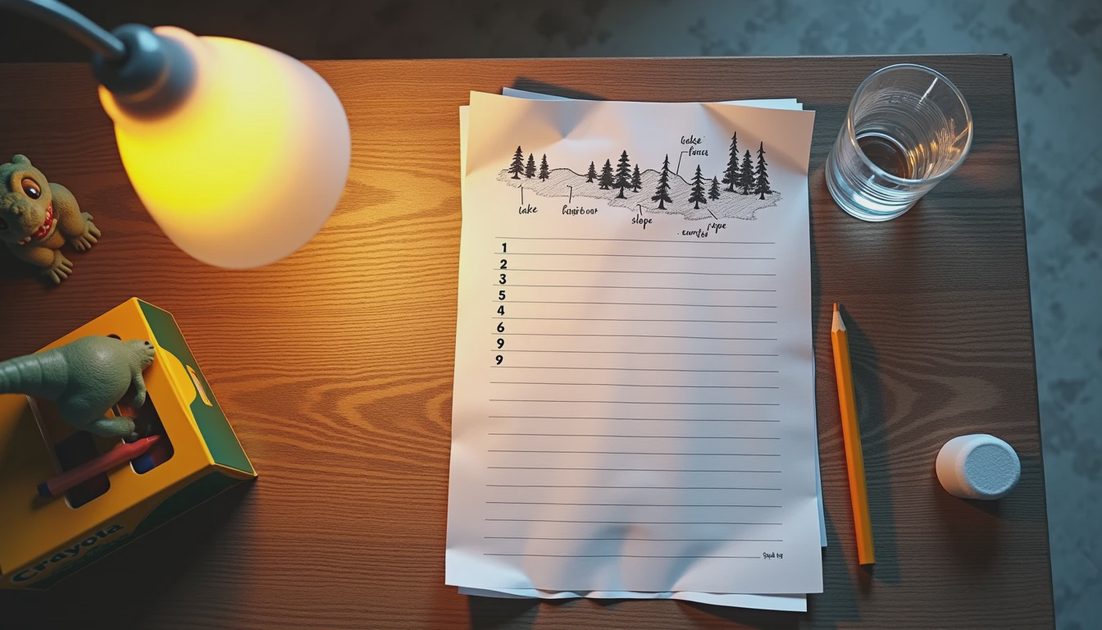
The moment my sessions improved was the moment I stopped trying to "win" the opening and started trying to learn it. Before I press start, I get a notebook or scrap paper ready. I write down one question about the game, whatever I am most curious about, then I play until I can answer it. For a survival game beginner guide, that habit matters more than any tip about which tool to craft first, because it turns passive confusion into active discovery.

The Survival Game Beginner Guide I Use for Every New Title
Think of this section as the survival game beginner guide I wish someone had handed me before my first awkward night in the genre. I have run this sequence in coastal settings, frozen wastes, and alien valleys, and it holds up everywhere, because it follows the game's logic instead of fighting it.
The framework has five moves, in this order:
Locate shelter first. Find a spot with nearby resources, a defensible approach, and room to expand. You are not choosing your forever home; you are choosing where you survive night one.
Secure water and food before you build anything fancy. A warm bed and a wall mean nothing if your character is starving or dehydrated by morning.
Scout the map edges on foot. Walk the perimeter of the area you can reach safely. You are looking for what exists, not collecting everything; knowledge of the map is worth more than any single resource haul.
Avoid combat you do not need. Early combat in survival games is a gamble with your weakest gear. Pick fights only when they protect your shelter or feed you.
Find the core loop and repeat it once on purpose. Harvest something, refine it, use it, and watch what the game does in response. One clean loop teaches you more than an hour of aimless wandering.
I keep the list short on purpose. Don't overthink it; you will refine every step once you know the specific game, but the skeleton stays the same.
Why Each Move Is in That Order
The order is not random. Shelter comes first because the day-night cycle is the one pressure every survival game applies from minute one, and you need a safe place to test everything else. Food and water come second because they are the cheapest failure state, the one that ends a run while you are still learning. Scouting third because the map tells you where the real game is, and most beginner frustration comes from building the wrong thing in the wrong place. Combat avoidance and the core loop round it out because both protect your momentum: one keeps your resources safe, and the other gives you a reason to keep playing.
What the First Two Hours Look Like on a Clock
A framework is only useful if it fits the time you have. Since I mostly play in one- to two-hour blocks after the kids are in bed, I time-box the five moves instead of letting them sprawl. The table below shows the pace I aim for, and it doubles as a survival game beginner guide for pacing any new title you pick up on a weeknight.
Time in the session | Focus | What success looks like |
|---|---|---|
First 20 minutes | Find shelter and drop a starter marker | A safe spot chosen, resources noted nearby |
Next 30 minutes | Water, food, and the simplest tools | A reliable food source and a filled water source |
Next 40 minutes | Scout the edges and dodge fights | A mental map of exits, dangers, and landmarks |
Final 30 minutes | Repeat one core loop near base | One full harvest-refine-use cycle completed |
When the session ends, I write down one sentence about what the game wants me to do next. That sentence becomes the opening goal of my next session, and it removes the "what was I doing again?" tax that kills so many runs for busy adults.
Mistakes I Made So You Can Skip Them
The first few survival games I played, I did just about everything wrong, and the mistakes were all the same flavor: I prioritized visible progress over usable knowledge.
I built a large base before I understood the local threats, then had to relocate because resources ran dry nearby.
I hoarded rare-looking materials I never used while ignoring common ones the game clearly wanted me to spend.
I fought every creature I met in the first hour and burned through my food and bandages before nightfall.
The thread running through all three is that I treated the opening like a checklist of achievements instead of a research phase. Once I flipped that assumption, the genre opened up. If a session ends with a working shelter, a full stomach, and one answered question about the map, it was a good session, even if nothing exploded and no level-up chime played. For a player with limited evenings, that quiet kind of progress is what keeps a game alive in your rotation for months.