One evening early in my survival crafting days, I died of thirst while carrying forty units of a rare fruit I was saving for a recipe I never found. That moment taught me more about how to manage resources in survival games than any tutorial ever did: stockpiling the rare stuff is often the exact move that kills you, while spending the common stuff is what keeps you alive. Most beginner frustration in this genre does not come from a lack of resources. It comes from treating them the wrong way.
I am Mike Bennett, and I have spent roughly twenty years learning to think like a systems operator instead of a pack rat. The shift happened when I started asking a different question. Instead of asking "what if I need this later?", I started asking "what problem does this solve right now?" That single change reorganized every survival game I touched afterward, and it is the heart of how I want to talk about resource management here.
Why New Players Hoard in the First Place
Hoarding is not a personality flaw; it is a reaction to the game's design. Survival games are built to feel scarce. The first hours shower you with warnings, empty meters, and dangerous nights, so your brain reasonably concludes that every material is precious and every loss is a disaster. The problem is that the game's early scarcity is often a teaching tool, not a permanent condition, and the players who succeed are the ones who learn to spend.
In my experience, hoarding habits show up in three predictable shapes. The first is holding rare items you cannot use yet, in case a recipe appears. The second is refusing to spend common materials on disposable tools because they feel like waste. The third is treating the inventory screen like a museum where full stacks are the goal. All three feel rational in the moment and all three slow you down, because they lock up capacity, weight, and attention that your actual problems need.
The Cost of a Full Backpack
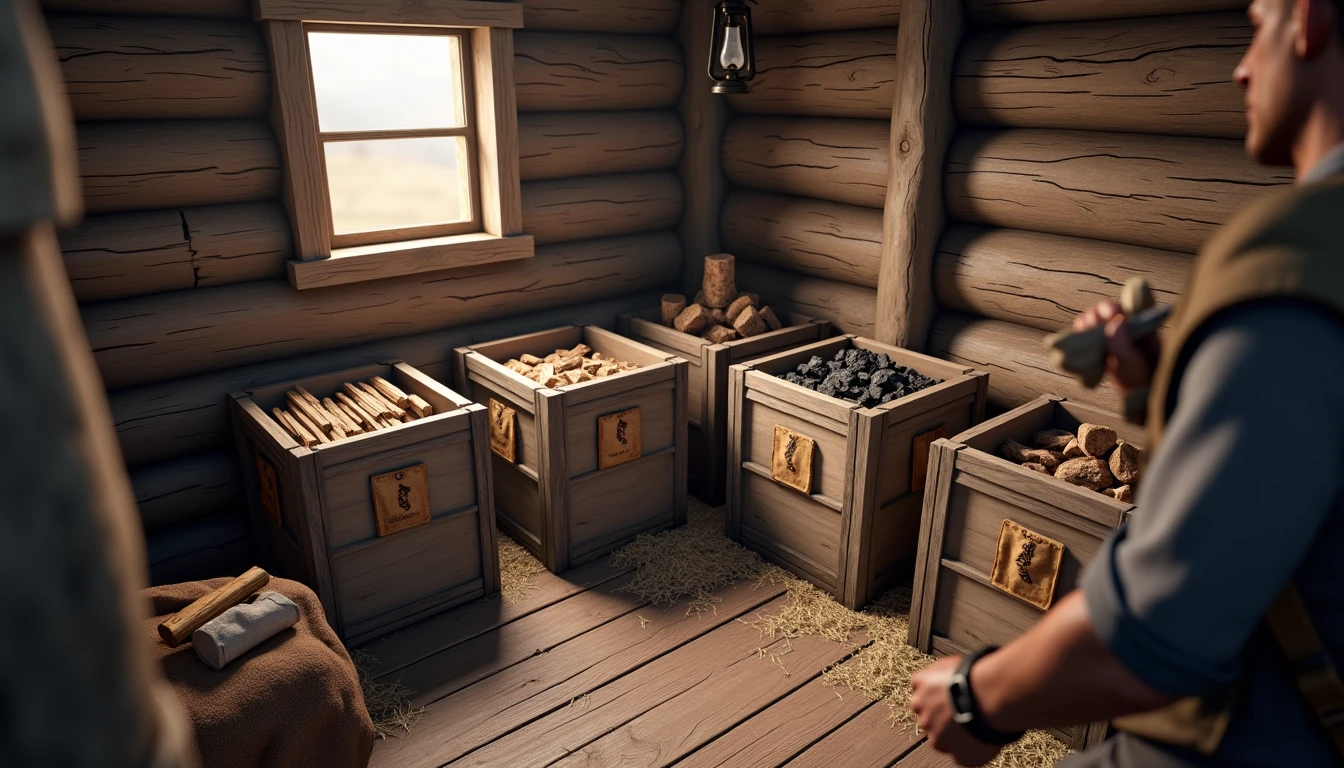
Here is what a full inventory really costs in a survival game: it costs you the ability to pick up the one thing the map is offering you right now. When your pack is jammed with wood you are "saving for later", you walk past the ore vein that would let you upgrade your tools. The game keeps moving, the night keeps coming, and your cautiousness quietly converts into a grind that did not need to happen.
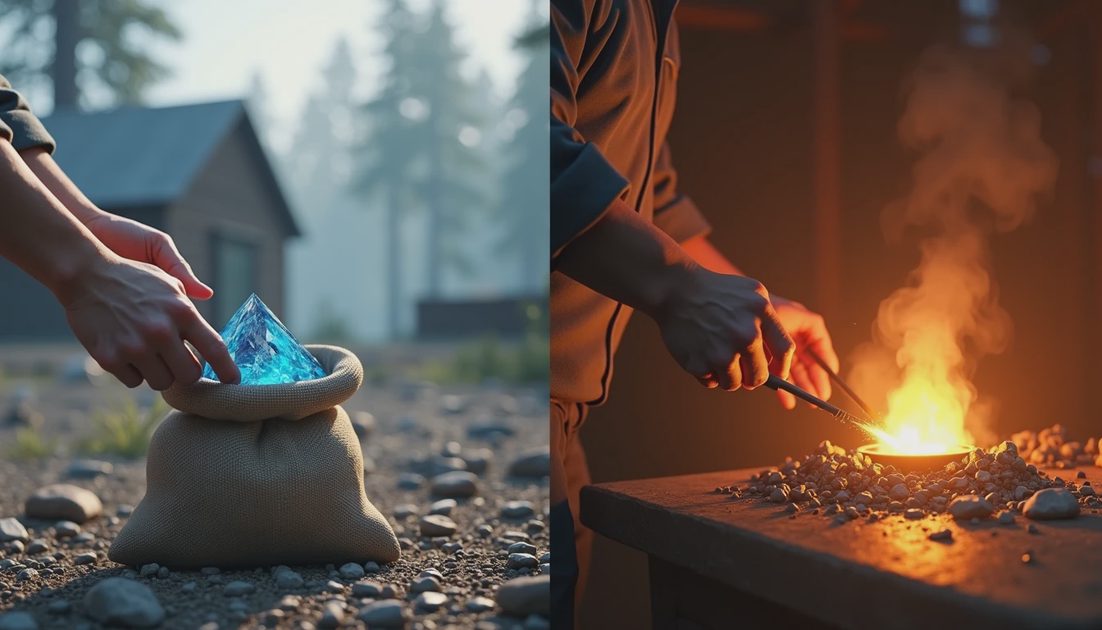
Three Resources I Used to Hoard, and Why I Stopped
Learning how to manage resources in survival games is mostly a process of unlearning, so let me walk through the three things I stockpiled for the longest and the reasons I finally let them go. Each one has a moment where hoarding feels correct, and each one has a counter-moment where it quietly hurts you.
Rare Wood
The first rare wood I found in any new game always went straight into a storage chest for a "special project" that never came. Meanwhile my tools were breaking because I refused to spend that same wood on handles and repairs. The lesson was uncomfortable: in the early game, rare materials exist to be converted into capability, and capability is what earns you more materials later. Keep a small reserve if it makes you feel safe, but spend the rest on whatever moves your tools or defenses forward today.
Special Seeds
Games love giving you a single seed of a plant that produces a great food source, and I used to lock those seeds away immediately. Then I realized the seed is worthless until it is planted, and the plant is worthless until it is harvested. The clever move is to plant the seed the moment you have soil and a safe corner, then spend the harvest on fuel for your next expedition. A seed in the ground is an investment; a seed in a chest is a museum piece.
"Save for Later" Crafting Parts
The most dangerous hoard is the vague one: a handful of parts you are certain will combine into something important once you find the recipe. I carried those parts for entire playthroughs and never once needed them at the moment I thought I would. The rule I use now is simple. If the game has not shown me what a part is for, that part is cargo, and cargo gets spent or dropped the moment it blocks something useful.
Here are the resources I actively stopped hoarding, and the mindset behind each one:
Rare wood and specialty lumber: spend it on tools and upgrades while it is still relevant.
Special seeds and starter crops: plant them in the first safe spot instead of banking them.
Unidentified crafting parts: keep one, spend or drop the duplicates.
Cooked food beyond a small buffer: eat it before it spoils, because spoiled food is pure loss.
Healing items past a modest reserve: carry a little and store a little; the rest protects you from nothing.

Circulation Beats Preservation in the Early Game
Here is the core idea behind how to manage resources in survival games during the opening stretch: resources only matter when they are moving. Wood that becomes a workbench lets you make nails. Nails that become storage let you collect ore safely. Ore that becomes tools lets you gather faster. The instant a resource stops moving, it starts costing you, because everything you carry has a carrying cost and everything you store has a maintenance cost.
The table below maps the common hoarding symptoms I see to the causes behind them, so you can spot the pattern in your own session before it costs you a run.
Symptom | What it usually means |
|---|---|
You die with a pack full of food items | You are treating food as wealth instead of fuel |
Your tools keep breaking while rare materials sit idle | You are reserving materials for a project that has no date |
You cannot pick up anything new | Your storage plan is serving the past, not the present |
You grind the same three resources every session | You stopped spending long enough to get stuck in a loop |
You feel anxious every time you use an item | You are hoarding for safety in a game where action is the safety |
When I see those symptoms in my own play, the fix is rarely to gather more. It is to set a tiny goal that forces me to spend, then let the game's loop refill what I used.
A Simple Rule That Covers Most Decisions
Keep it simple: ask whether the resource solves a problem in the next hour. If it does, spend it without guilt. If it does not, it belongs in a small reserve, not the center of your inventory. The reserve is where your "what if" anxiety lives, and it should be small enough that your real carrying space stays open for what the map puts in front of you.
This rule has made my evenings shorter and my runs longer. I stop worrying about efficiency and start making progress, which matters a lot more when your whole session is ninety minutes after bedtime. The rare fruit that once killed me now gets eaten on the spot, and the recipe I never found no longer gets the chance to hold my game hostage.