
If your weeknight gaming window is roughly an hour and a half, the most useful question is not "what should I play tonight." It is "how do I split the next ninety minutes so the session ends on a save I can actually walk away from." That's the lens I use when I'm planning what to do in a two hour gaming session, and it's the lens this whole article is built around. Here's what I'd do: stop thinking of the night as one long block and start treating it as three smaller blocks that each have a different job.
Treat the 90 Minutes Like Three Small Blocks
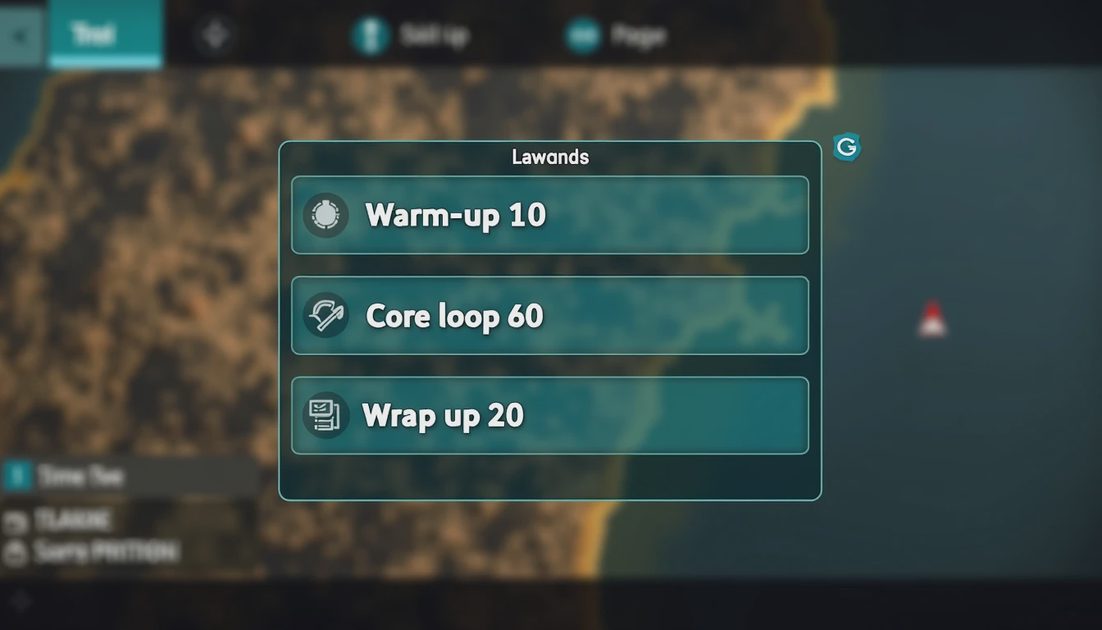
A 90-minute session, in my experience, almost always falls apart when the whole night gets spent on a single task. You start one thing, get pulled into it, and suddenly the kids' bedtime is ten minutes away and you're either force-quitting the game or staying up later than you planned. The fix is structural. Split the night into three named blocks: a 10-minute warm-up, a 60-minute core loop, and a 20-minute wrap-up. Each block has its own purpose and its own exit point.
The reason this matters is that a weeknight session is not a single resource — it is three small decisions stacked on top of each other. If you know in advance what each block is for, you stop debating at the controller and you start playing.
Here is how I break the time down on a normal Tuesday night:
Block | Length | Purpose | Exit condition |
|---|---|---|---|
Warm-up | 10 min | Pick up where the save left off, handle any quick inbox tasks | You're oriented and know your one goal for the night |
Core loop | 60 min | One meaningful task — a quest step, a base upgrade, a dungeon run | The task either finishes or naturally pauses at a safe spot |
Wrap-up | 20 min | Wrap crafting queues, bank loot, set up next session's starting point | A clear "if I stopped now, I'd be fine" save exists |
The numbers are not magic. The point is that the warm-up is short on purpose, and the wrap-up is reserved before you actually need it. If you don't reserve a wrap-up block, you won't have one — the core loop will eat the whole night. This is the part of what to do in a two hour gaming session that people skip most often, and it is the part that saves the most nights.
Why the warm-up is exactly 10 minutes
The warm-up is the easiest block to skip, and it's the one that causes the most wasted minutes later. In my experience, ten minutes is just enough to load the save, talk to any vendor or companion you need, and remind yourself where you were. It's also short enough that you don't fall into the trap of treating the warm-up as the session. If you're still wandering around after ten minutes, you've quietly told yourself the core loop doesn't really start until minute fifteen, and your whole night just lost fifteen minutes.
Why the wrap-up has to be twenty minutes
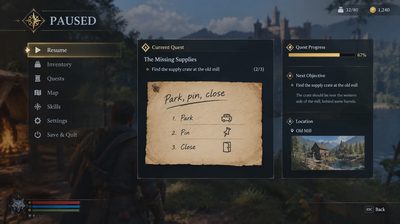
Twenty minutes sounds generous until you remember that saving the game, banking inventory, queuing up crafting, and parking your character at a useful fast-travel point all take small individual minutes that add up. The wrap-up block is also when you do the small things that make tomorrow's session easier — reading a single in-game note, marking the next objective, dropping a pin on the map. None of these tasks take long on their own, but together they are the difference between walking into tonight's session clear-headed and walking into it already five minutes behind.
Pick a Task That Fits Each Block
The second decision is choosing tasks that respect the time you actually have. Not every task in a game fits a 90-minute session, and the games that are easiest to come back to — the ones that respect your time — usually give you several different kinds of tasks to choose from at any given moment. If you're still refining what to do in a two hour gaming session, this is the part where you get specific about which task goes inside the core loop.
When I'm picking tonight's core-loop task, I ask one question: if I get pulled away in the middle of this, will the game leave me somewhere I can pick up from tomorrow? That single question rules out a surprising number of options. Long un-pausable boss fights, multi-stage escort missions, and base-building demolitions that require an empty inventory to finish are all poor fits. Cleaning out a dungeon room, completing a single quest step, or upgrading one bench in your base are good fits. Save the long chain for a weekend.
Here are the kinds of tasks I sort each night's session around:
Quick wins (15–20 min): clearing a small dungeon room, finishing one crafting tier, knocking out a single side objective.
Steady tasks (30–45 min): a short quest chain, a focused farming run, an exploration loop around one zone.
Heavy tasks (60+ min): a boss, a story climax, a major base rebuild — these belong on weekends, not weeknights.
The list looks obvious when you read it, but in practice the heavy task is the one that always tries to creep into a Tuesday. If I notice I'm about to start one of those, I either downgrade the goal or I accept that tonight will be a longer night and tell my partner first. Don't just slide into it.
A quick test for "is this a weeknight task?"
Before I commit to a task, I run it through a short mental check. Is there a save point or fast-travel marker near where I'll be when I stop? Is the inventory about to overflow in a way that will cost me ten minutes of banking? Will I need to remember anything technical when I come back tomorrow? If the answer to any of those is "yes, and I haven't planned for it," the task probably doesn't fit a 90-minute session. Pick something smaller.
When to Call It Early
The hardest part of a short session is not starting it. It's stopping it. Most of the bad sessions I have had did not start badly — they ended badly, usually ten minutes after I told myself I would stop.
The honest move is to set an alarm on your phone for the wrap-up block. Not for the end of the session — for the start of the wrap-up. By the time the wrap-up block begins, your decision is already made. You're banking loot, you're parking the character, and you're not starting anything new. The alarm is a permission slip you gave yourself twenty minutes earlier, when you weren't in the middle of a fun moment.
There are also nights when the right call is to stop before the wrap-up block even starts. If something goes wrong at minute fifty — a death loop, a quest bug, a confusing story moment — don't grind through it. The marginal progress you might squeeze out in the last twenty minutes is not worth the frustration that follows you to bed. Save your time for the fun stuff. The session is over when you've either finished your one task or you know that finishing it will cost you more than it's worth.
The wrap-up checklist
When the wrap-up block starts, I run through the same four steps almost every night. This is the list on the notepad next to my desk:
Bank or sell anything you'll need to pick up tomorrow.
Park your character near a save point, fast-travel marker, or your base.
Make the next objective obvious — drop a map pin, leave a single in-game note, set a quest tracker.
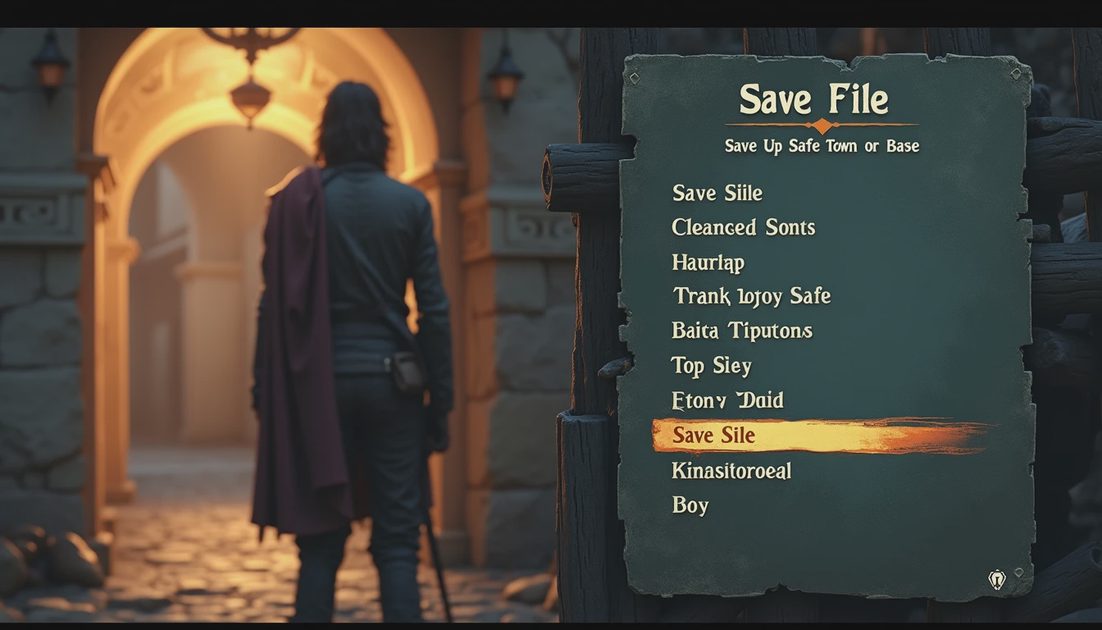
Close the game, not the menu. The menu is not a save.
That fourth item matters more than people think. Closing the game forces the save to commit. Closing just the menu leaves the next session starting from however you happened to be standing.
A Two-Line Summary for the Week
If you take nothing else from this article, take these two sentences. A 90-minute session works well as a 10-minute warm-up, a 60-minute core loop, and a 20-minute wrap-up. Pick one task for the core loop that you can finish or pause cleanly. That's the whole framework, and it fits just about every game that gives you any choice about what to do next.