Some games are easy to come back to after a busy week. Others punish you for the time you spent away — and the punishment is not optional. Crops wither, resources decay, timers tick down, NPCs give up on you, factions shift, weather windows close. None of those are inherently bad game design, but all of them turn the game into a second job if your real job is already long. The good news is that you can usually tell from the Steam page or the first hour whether a game is going to make your weeknight life easier or harder, and you can build around either kind. Save your time for the fun stuff. The fun stuff is the part where the game doesn't punish you for having a life.
This article is about how to recognize games that respect your time and, just as importantly, how to play the games that don't so that your weeknight schedule still comes out the other side intact.
What "Punishes Long Breaks" Actually Looks Like
Punishing design isn't always loud. Some games throw a giant red warning at you. Others quietly make your save slightly worse every hour you aren't playing. The list below covers the most common punishment patterns I've seen, in roughly the order of how much they hurt a weeknight player:
Real-time crop or resource decay — your farm or base loses materials while you're away.
Rotating seasons or rotating shops — useful items appear on a fixed schedule you can't sync to.
World events that pass you by — a faction storyline moves on without you if you skip a week.
Daily login bonuses — rewards that vanish if you don't open the game today.
Soft save corruption — saves that get noticeably worse in quality the longer you wait between sessions.
Companion or crew unhappiness timers — NPCs that drift away from you over real-world days.
Any one of these is manageable. Two or three stacked together, in my experience, is when a game starts feeling like a job. The thing to watch for is the stack. A game with one passive-decay system and one rotating shop is usually fine. A game with passive decay plus rotating shops plus companion timers plus daily bonuses is not a weeknight game, no matter how much you love it.
The test that catches it before you commit
The easiest time to discover a game is going to punish you is the first hour. If during that hour you find yourself checking the in-game clock, the resource meters, or any kind of countdown, the game has a punishment system and you should assume it will be more relevant in week three than in week one. Most designers tune these systems to feel gentle at the start and to bite later. If it feels annoying in hour one, it will feel worse in hour forty.
Designs That Treat Weeknight Players Fairly
The opposite side of the spectrum is also worth naming, because games that respect your time are out there and they tend to share a few obvious design choices. None of these are make-or-break on their own, but together they add up to a game you can put down on a Tuesday and pick back up on a Sunday without losing ground.
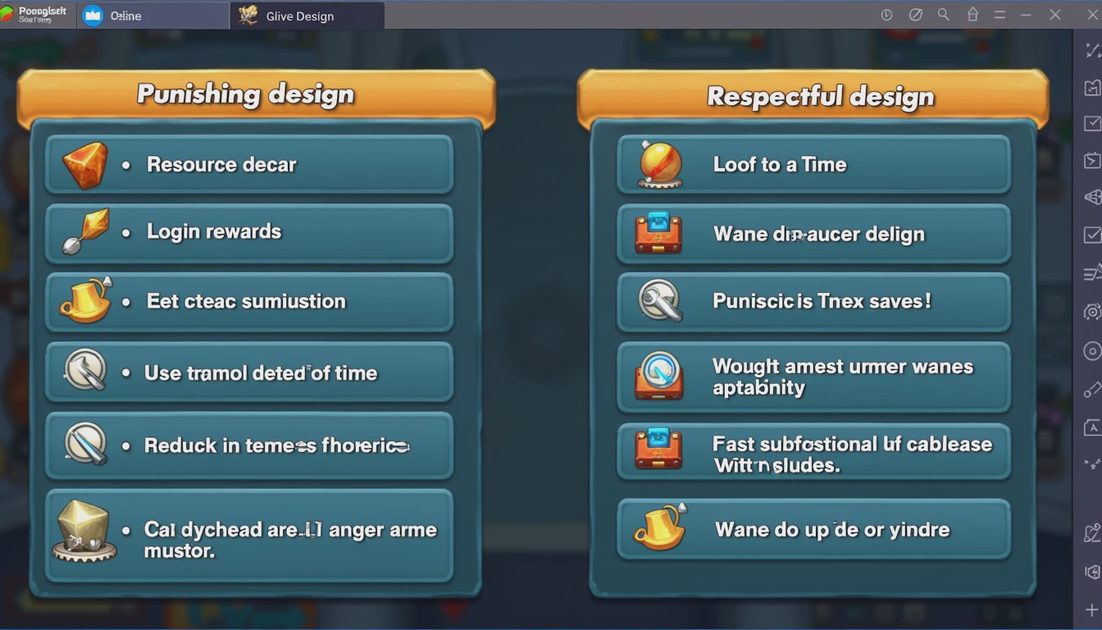
Here's the comparison that I keep in my head when I'm evaluating a new purchase:
Punishing design | Respectful design |
|---|---|
Resources decay on a real-world timer | Resources pause when the game is closed |
Daily login bonuses | No login pressure |
World events pass you by | Events pause or repeat on a loop |
Save quality degrades over time | Save is stable indefinitely |
Companions need constant check-ins | Companions accept longer absences |
Crafting queues that overflow | Crafting queues that hold without penalty |
If a game hits three or more of the "respectful" column on its store page, in my experience you're looking at a game that will feel good in three months, not just this week. If it hits zero or one, you should plan to play it more like a weekend hobby than a weeknight routine.
The "pause on close" question
The single biggest respect-your-time feature is whether the game's timers pause when the application is closed. Most single-player survival crafting games do this. Some do not, and a few make the timer intentionally hostile — ticking even when you're not in the game. If a game does the latter, treat it as a hobby, not a weeknight option. The game will not wait for you, and you will end up playing it on weekends or not at all.
Pick a Build That Survives Your Real Schedule
Even in games that have punishing systems, you can pick a build — a character spec, a base layout, a faction strategy — that survives your real schedule. The trick is to assume from day one that you will sometimes disappear for a week. If your build needs daily check-ins to function, you have built a job, not a character.
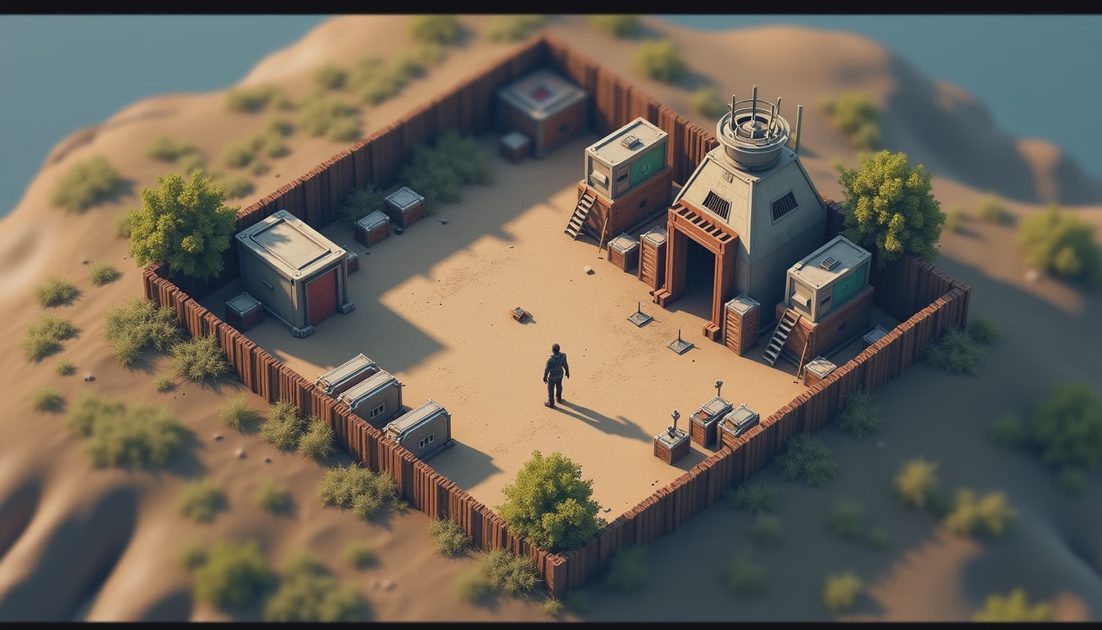
The simplest version of this rule is: pick whatever is least maintenance-intensive. In a survival crafting game with a heavy base-building loop, that usually means a small, defended base with a few slow-but-reliable generators, not a sprawling automated factory with seventeen conveyor belts. In an RPG with a dense skill tree, that means investing in passive skills that work while you aren't playing, not active abilities that require constant triggers. In a strategy game with a long tech tree, that means queuing long research projects in the background and not relying on short-window bonuses.
This is also where returning to an RPG after a long break becomes easier. A build designed for weeknight play — passive bonuses, slow queues, low-maintenance companions — survives a two-week absence almost the same way it survives a single-night pause. A build designed for daily login bonuses does not. This is one of the clearest signals that you've moved from a punishing design into the smaller group of games that respect your time, even if the genre didn't change.
A short checklist for weeknight-friendly builds
When you're picking a build, run it through this list:
Does it require daily check-ins, or can it run unattended for a week?
Are the key resources stable, or do they decay over real-world time?
Can the build survive a missed crafting queue, or does the queue overflow punish you?
Does the build scale with skill, or does it scale with time spent grinding?
If the worst happens and you disappear for two weeks, can you re-enter without a major rebuild?
If the answer to most of these is "no," you're looking at a build that will slowly eat your life. Pick a different build. The game will not love you back for the extra hours.
Three Rules for Choosing Your Next Save
If you're choosing what to play next, and you want a game that fits a busy adult life, three rules will keep you out of trouble. None of them are subtle. All of them have saved me from at least one bad purchase.
Rule one: read the Steam page for "pause on close," "decay," and "login." If any of those words show up prominently, decide whether you're signing up for a hobby or a weeknight game. Pick one, not both.
Rule two: play the first hour like a detective. If the game shows you a countdown or a decay meter in the tutorial, mark the game as hobby-tier. If it doesn't, you're probably fine to play it weeknight-tier.
Rule three: pick your second save file on purpose. The first save file in any new RPG is the one you build the way the tutorial wants you to. The second save file is the one you build for your real schedule. Build the second save file with the weeknight checklist above, and you will not regret the choice in three months.