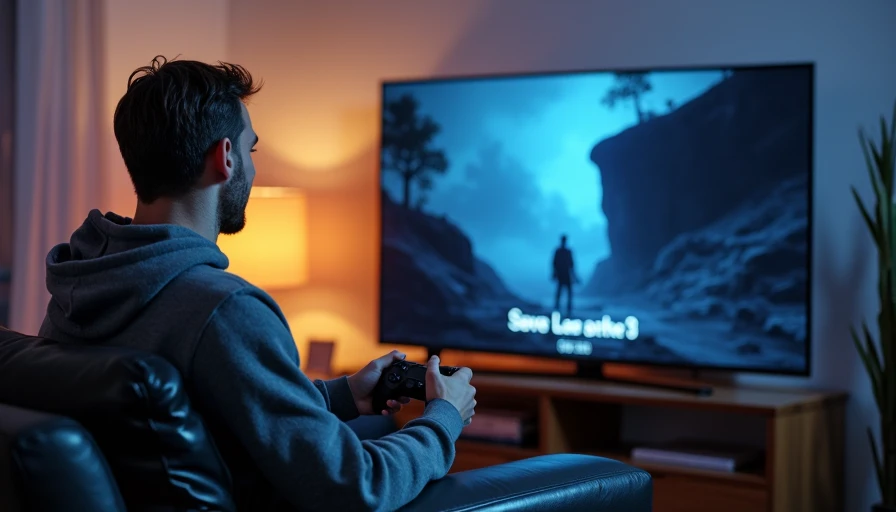
Three months is a long time for any RPG. By the time you load the save, you've forgotten which quest you were on, what the menu layout means, and why your character is standing on a cliff in the rain. The first thing to do — before you play a single minute — is accept that the momentum you had before the break is gone. It is not coming back. Trying to recover it is the most common reason people bounce off an old save, play badly for an hour, and quit the game again. The goal of returning is not to feel like you used to feel. The goal is to read the save in five minutes, make one small move, and get out alive.
If you've spent any time thinking about how to return to an RPG after a long break, you've probably noticed there isn't one magic step. There are a handful of small steps, in roughly the same order, that turn a confusing old save into something that feels familiar again. Keep it simple. The version that works is the one you actually finish.
First, Accept That Your Old Momentum Is Gone
This is the section that sounds obvious and isn't. Old momentum is not skill. It's familiarity with the menus, the map, your build, the side characters, the pacing of the story. None of that survived the break. You are now a new player using a save file you don't recognize. The earlier you accept it, the less it hurts when you die to a tutorial enemy.
What this means in practice: do not try to play the way you used to play. Don't try to do five things at once. Don't try to remember the entire quest log. Don't try to recover your old strategic style. All of those impulses come from a version of you who had forty hours of context, and that version of you is not in the room tonight. Tonight's version has maybe ninety minutes and zero context. Build the plan around tonight's version.
What you can rely on is your general systems literacy. After twenty years of gaming across PC, consoles, and handhelds, I can usually tell what's happening in a UI even when I've never seen it before. That general skill does survive long breaks. Specific knowledge of a particular save file does not. Lean on the general skill. Rebuild the specific knowledge from scratch, starting in the next section.
A quick inventory of what you actually lost
When you come back, here's roughly what the three months have erased. Knowing what to expect makes the readjustment less frustrating:
Where you were in the story.
Which companions or party members were active.
What your inventory actually contained and what was queued.
The current state of any base, settlement, or hub you were building.
Your muscle memory for the specific menu layout.
Which crafting benches were unlocked and which still needed materials.
None of these are catastrophic. All of them are easier to recover if you treat them as "I don't know this yet" rather than "I should know this by now."
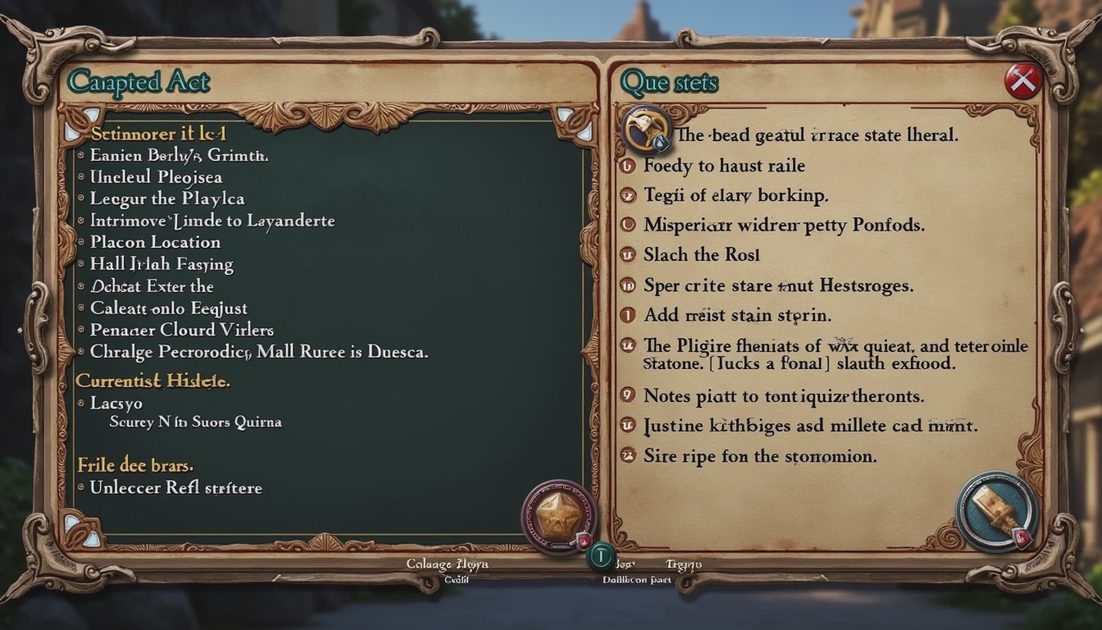
Read Your Old Notes Before You Touch the Save
Every player who plays RPGs for a long time eventually leaves themselves a clue. It might be a paper notebook next to the desk, a note app on a phone, a screenshot folder, or even a single Discord message. If you've ever paused mid-session to write down a question rather than immediately searching for the answer, this is when that habit pays off. Find the old notes before you load anything.
The notes serve two functions. First, they tell you where you were. "Day 3 of the southern route, ran out of torches near the bridge" is enough to point you in the right direction. Second, and more importantly, the notes tell you who you were when you last played. Were you confused? Excited? Stuck? That emotional context is surprisingly useful when you start playing again, because it tells you whether the old session ended well or badly. If the old session ended badly, you should expect to feel a little of that same frustration in the first ten minutes and not let it snowball.
If you don't have notes, that's fine. Look at the most recent screenshots. Look at the quest log. Look at the time stamp on the save file. Anything that tells you "this is what was happening" is useful. None of this step is about the game itself — it's about reducing the gap between who you are now and who you were when you last played, which is the whole point of figuring out how to return to an RPG after a long break without bouncing off.
The five-minute note scan
The goal of the note scan is not to understand everything. The goal is to leave yourself with three answers:
Roughly which act or chapter am I in?
What is the single quest that was active?
Where is my character physically located, and is it a safe spot?
If you can answer those three questions in five minutes, you can load the save confidently. If you can't, you need more notes, or a walkthrough, before you play. Don't load a save you can't orient yourself in — that's how you wander into a story-critical moment you no longer understand.
Do a Low-Stakes Tutorial Recap
Once you've loaded the save, the worst thing you can do is sprint toward the main quest. The second-worst thing is to wander the open world. Both of those will land you in a moment where the game assumes context you don't have, and you'll either die or get stuck in a conversation that doesn't make sense.
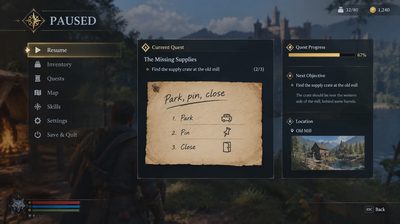
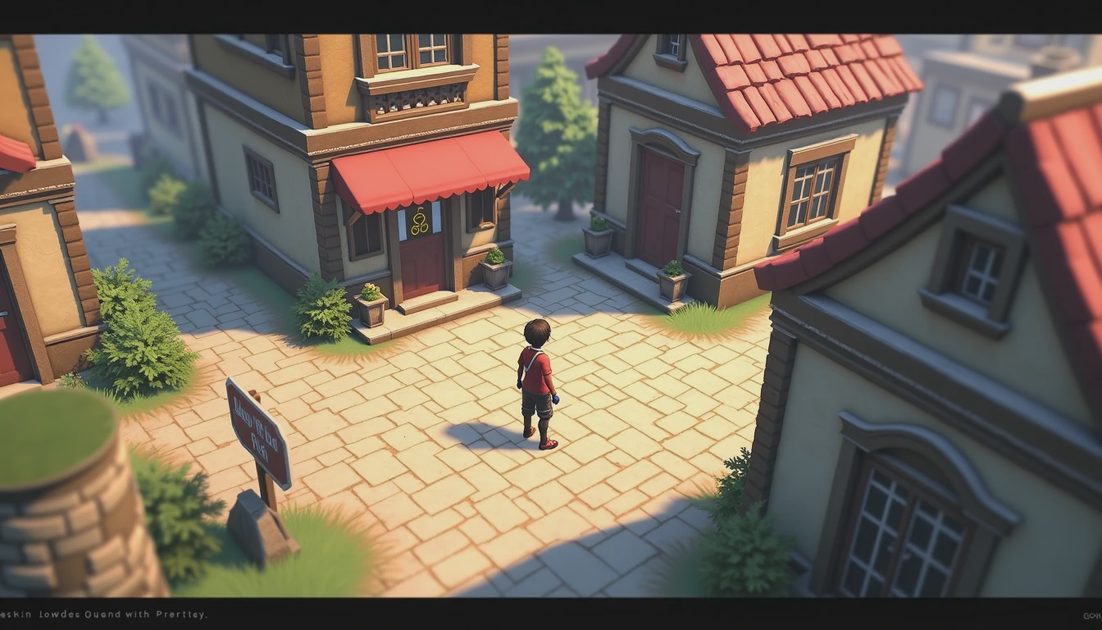
The right move is to do a low-stakes tutorial recap. Walk your character to the nearest safe town, hub, or home base. Buy a single low-cost item from a vendor. Open every menu — inventory, map, skills, settings — and just look at them. Don't change anything. Don't optimize anything. Just look. This is a five-minute "I am still a person who can read this UI" check, and it's the single most useful re-entry habit I've developed.
Many RPGs also have an in-game codex, journal, or recap section. If yours does, read the most recent entries. Don't read the whole thing — read the last two or three. That gives you enough story context to make the next dialogue line make sense, and it's faster than re-watching cutscenes.
What a good tutorial recap looks like
A good tutorial recap is short, gentle, and unscripted. Walk, look, interact with one vendor, read two journal entries. That's the whole thing. It should not feel productive. It should feel like stretching before exercise. If you find yourself trying to do anything more — fighting an enemy, starting a quest, building a base item — you have wandered out of the recap and into the session. That's fine, but name it as such.
Pick a Small Goal That Pays Off Quickly
The final re-entry step is the most important one. You need a goal that pays off in under forty minutes, ends on a clean save, and feels like a win. This is the same "one small win" idea from a weeknight session, but it's even more important after a long break, because the small win rebuilds the basic sense that the game is responsive to what you do.
Here are the kinds of small goals I default to when I'm coming back to an old save. None of them require story knowledge. All of them leave a save point behind:
Goal type | Time needed | What it rebuilds |
|---|---|---|
Clear one dungeon room | 15–25 min | Combat memory, gear loadout awareness |
Finish one short side quest | 25–40 min | Quest log navigation, dialogue pacing |
Upgrade one bench or skill | 20–30 min | Inventory management, crafting UI |
Discover one map marker | 15–20 min | Map and fast-travel feel |
Hand in one stack of stored loot | 10–15 min | Vendor and storage UI |
Pick whichever goal fits your save file's current state, not whichever one sounds coolest. If your save is in a town, do the bench upgrade. If your save is on a road, do the map marker. The point is to pick the goal that requires the least amount of orientation. Once you've figured that out, the rest of how to return to an RPG after a long break becomes a series of small, repeatable nights — not one heroic session.
Don't try to recover the old momentum
The temptation after a long break is to push harder than usual — to clear a dungeon that took you three tries the first time, to finish the story, to "make up for lost time." Resist this. The session after a long break is not the session to prove anything. It's the session to remind yourself that you can still play this game. The momentum will come back on its own after two or three short sessions. Trying to force it on the first night back is how RPGs get abandoned a second time.