
Saturday is the rare block where I can sit down for three or four hours without one eye on the clock. That makes it precious, which is exactly why I refuse to gamble it on a store page and a good trailer. A weekend is not where you take chances on hype; it is where you cash in on games that respect your time. So I built a five-question gut check, and I run it before I commit a single Saturday to anything new.
The questions are deliberately simple. They do not measure graphics, story pedigree, or review scores. They measure one thing: whether the game will still be worth playing at hour four of a real Saturday, with real interruptions. Everything in this article is that check, plus a small rubric you can sketch on scrap paper in under a minute.
The Pacing Question
Before I worry about anything else, I ask how the game behaves inside a two-hour block. Does it hand me a satisfying arc in that window, or does it assume I will play for six hours before anything lands? Pacing is the first filter, because every other judgment gets easier once you know what a normal session feels like inside the game.
I look for descriptions of session rhythm instead of total play time. In my experience, the games that respect your time have players describing evenings where they logged off satisfied after a focused session. The ones that do not produce comments like "it really opens up after twenty hours," which I have learned to translate as "the first twenty hours are a toll booth."

The Save System and the Off-Ramp
A Saturday is long, but my Saturday is not elastic. The kids will need lunch, a package will arrive, a neighbor will knock. So the second question is about exits: where am I allowed to stop, and how much does stopping cost? If the only safe stopping points are hours apart, the game has quietly turned my weekend into a shift.
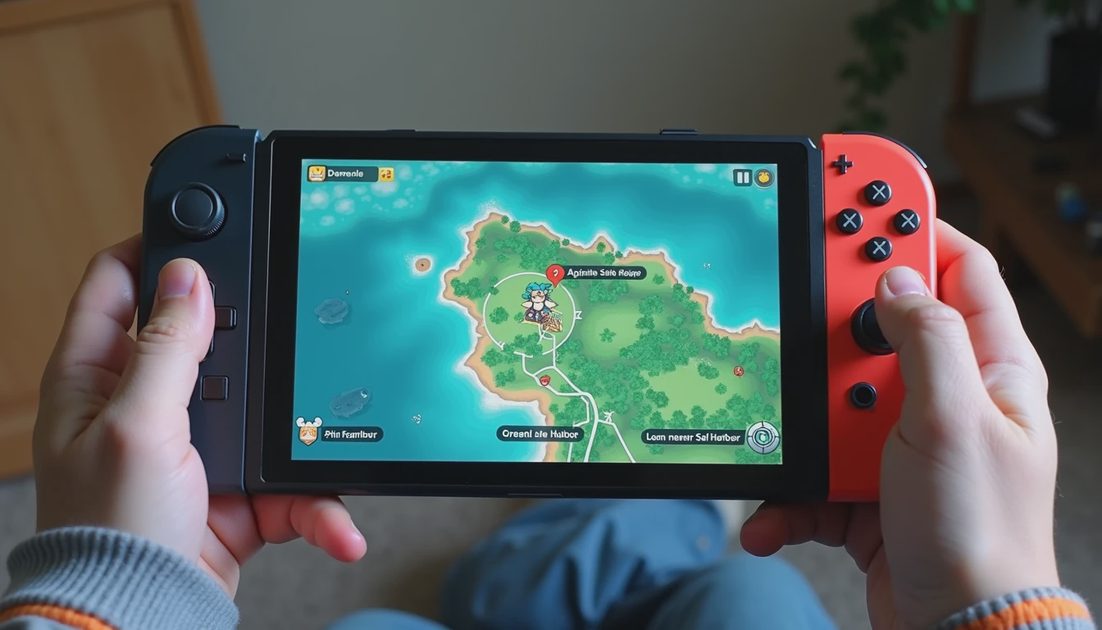
I have a simple standard now. A game that lets me save anywhere, or reach a safe harbor within a few minutes, will see me again next weekend. A game that treats stopping as an inconvenience is not making me play more; it is making me resent the time I do have. On the Saturday test, that difference shows up faster than any other flaw.
The On-Ramp and the Rest of the Crowd
The third question is about entry: can I get into this on a Saturday morning with lukewarm coffee and a half-awake brain? Some games introduce their systems gently and forgive early mistakes. Others hand you a manual and let the forest floor teach you the hard way. I am not against difficulty, but I am against spending my one free morning on a reading assignment. A gentle on-ramp is not a sign of a shallow game; it is usually a sign of a developer who knows adults will be returning after a week away.
The fourth question is about the crowd: who else is playing this, and what do they complain about? I read the tone of long-term players more than their praise. When the community's main complaint is that the game eats their evenings, that is an advertisement in my book. When the main complaint is that everything good is locked behind a slow middle, that is a warning I take seriously.
The Refund Question
The fifth question is the one most people skip: what happens if I am wrong? Digital storefronts have refund windows, but the real cost is not money. The real cost is a burned Saturday and the quiet feeling that you chose badly. So I ask how expensive a mistake would be. Can I test the game in its first hour and know what it will feel like at hour four? Or does the experience only reveal itself after a long warm-up?
This is another way of coming back to games that respect your time: they tend to make being wrong cheap. They show their character early, they do not hide the good parts behind a paywall of patience, and they let you walk away without making you feel like a quitter. If a game cannot show me what it is within the first real session, it is asking me to invest on faith.
The Rubric, All in One Place
Here is the rubric I sketch on scrap paper before I commit a Saturday, with the five questions squeezed into a three-column table:
Question | Green light | Red light |
|---|---|---|
Pacing | A satisfying two-hour arc, no warm-up tax | "It opens up after twenty hours" |
Off-ramp | Save anywhere or a quick safe harbor | Progress is held hostage by long sessions |
On-ramp | Gentle, forgiving introduction | A manual-first start that punishes mistakes |
Crowd | Regular players describe short sessions | The community treats the game as a second job |
Being wrong | Cheap to test, easy to abandon | Sunk cost appears in the first weekend |
If I count four or five greens, I schedule the game. Three greens, I wait for a sale. Two or fewer, I keep looking, because the weekend is the resource on the line.
When I do commit, I keep a few ground rules in my head so the experiment stays cheap:
Set a stopping checkpoint before the fun starts, not after.
Give the game one honest session before judging its pacing.
Keep a familiar fallback game ready for when the new one misses.
Write one line of notes after the session, so a bad choice still teaches something.
Leave at the first red light without negotiating with myself.
Keep it simple. A game does not need to be a landmark to deserve a Saturday; it just needs to give back more than it takes. Run the five questions once, trust the greens and reds, and your weekends will start ending with satisfaction instead of that vague feeling of a slot machine that paid out nothing.