Every few months, I scroll my library and notice the same small group of games still sitting there while dozens of others came and went. I used to write that off as nostalgia. It is not. The games I keep coming back to all get a specific set of systems right, and those systems happen to be exactly what someone needs when they play an hour on a Tuesday and four hours on a Sunday. After roughly twenty years of playing, I am convinced that the games that respect your time are rarely the loudest games in the storefront — they are the ones whose systems quietly forgive your absence.
So this is not a ranking, and it is not a shopping list. It is a systems-level reflection. What do the games that stay installed actually do differently from the ones that leave after two weeks? I have found five answers over the years, and they have changed how I choose what to buy in the first place.
Why "Installed" Is a Stronger Word Than "Beaten"
I finish fewer games than I used to, and I have made peace with that. What I notice instead is that a small set of titles never leaves my library, whether I am actively playing them or not. They sit through new releases, through months of other hobbies, through work crunch, and when I finally return they welcome me back without a grudge.
It is easy to point at games that respect your time and stop there. The harder insight is noticing which parts of those games actually do the respecting. In my experience it is never the graphics or the marketing. It is a handful of quiet systems: a save that understands families, a journal that remembers where I was, a base that does not punish me for walking away. Those systems are why the word "installed" describes trust rather than storage space.
When I sit down to sketch a layout on scrap paper, I am usually sketching one of those returning games, not a new purchase. That is the difference between a game I own and a game I live near.
The Systems That Survive Long Gaps
I stopped asking what a game is like during its high point and started asking what it is like in the moment I return to it after a month away. That single reframe explains almost every title that stays on my hard drive.
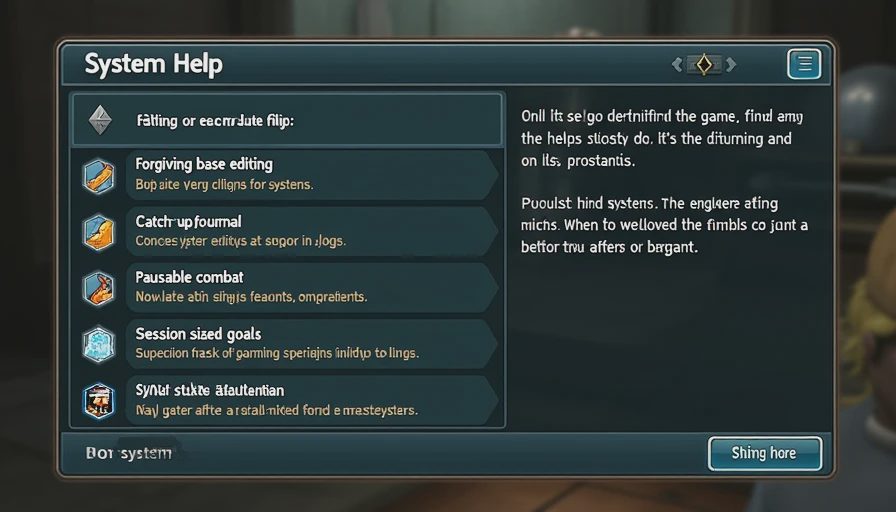
Here are the systems I keep noticing when I ask why a game survives my long gaps:
System in the game | Why it survives the gap |
|---|---|
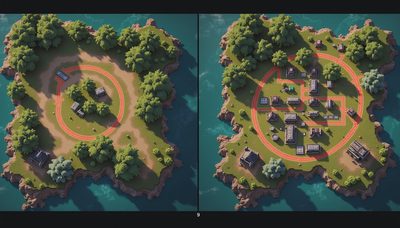
Forgiving base editing | I can rethink a layout instead of restarting it |
A catch-up journal | Ten minutes of reading replaces an hour of confusion |
Pausable, short combat | I never lose progress to an unplanned interruption |
Session-sized goals | One evening always produces a visible step forward |
Difficulty that waits | Returning rusty costs me practice time, not my save |
Read that table as a job description. Each row describes work the game is doing so I do not have to. The base editor in a survival crafting game does not care that I forgot my building plan; it lets me look at what exists and adjust. The journal in an RPG with a dense skill tree reminds me which faction I was helping and why. These are small features, but they are the difference between a game I return to and a game I abandoned.
What I Notice on the Way Back In
I have a returning ritual now. Before I press load after a long absence, I write down what I remember about the game on scrap paper — my goal, my location, what I was worried about. Then I load the save and compare. Games that survive my gaps pass that comparison almost immediately.
Here are the signals I check for in the first twenty minutes of a return:
The opening screen or journal steers me toward my actual next goal without a search.
A glance at my base or inventory explains why I built and kept what I did.
Controls come back inside one easy encounter, not one punishing hour.
When life interrupts the session, the game saves my spot without complaint.
Those four signals are rarer than you would think, and they map almost exactly onto the games that respect your time in my library. A game that fails all four is not a bad game; it is a game that assumes it is the only thing in your life. For me, that assumption is the dealbreaker, no matter how good the rest of it looks.
The Pattern I Try to Copy
Here's what I'd do. Sit down once and write your own three systems — the features you refuse to live without. Mine are a forgiving save, a catch-up journal, and base editing that does not punish absence. Yours might be completely different: a pause during cutscenes, a difficulty slider that goes down, a crafting queue that runs while you sleep.
There is one more thing I have noticed about the games that earn their place. They are usually the ones I asked a question about and left open on purpose. I pause mid-session, write the question on a sticky note, and close for the night. When I come back a month later, I get the rare pleasure of answering a question my past self actually cared about. New games rarely offer that. The familiar ones hand it to me the moment I load the save.
Once you have your three, use them as a filter when you shop and as a reason to return when you are between games. I promise you will buy fewer games and enjoy more of the ones you keep. That trade has been the single most useful change to my hobby in years, and it is the reason my library finally looks like a collection instead of a graveyard.