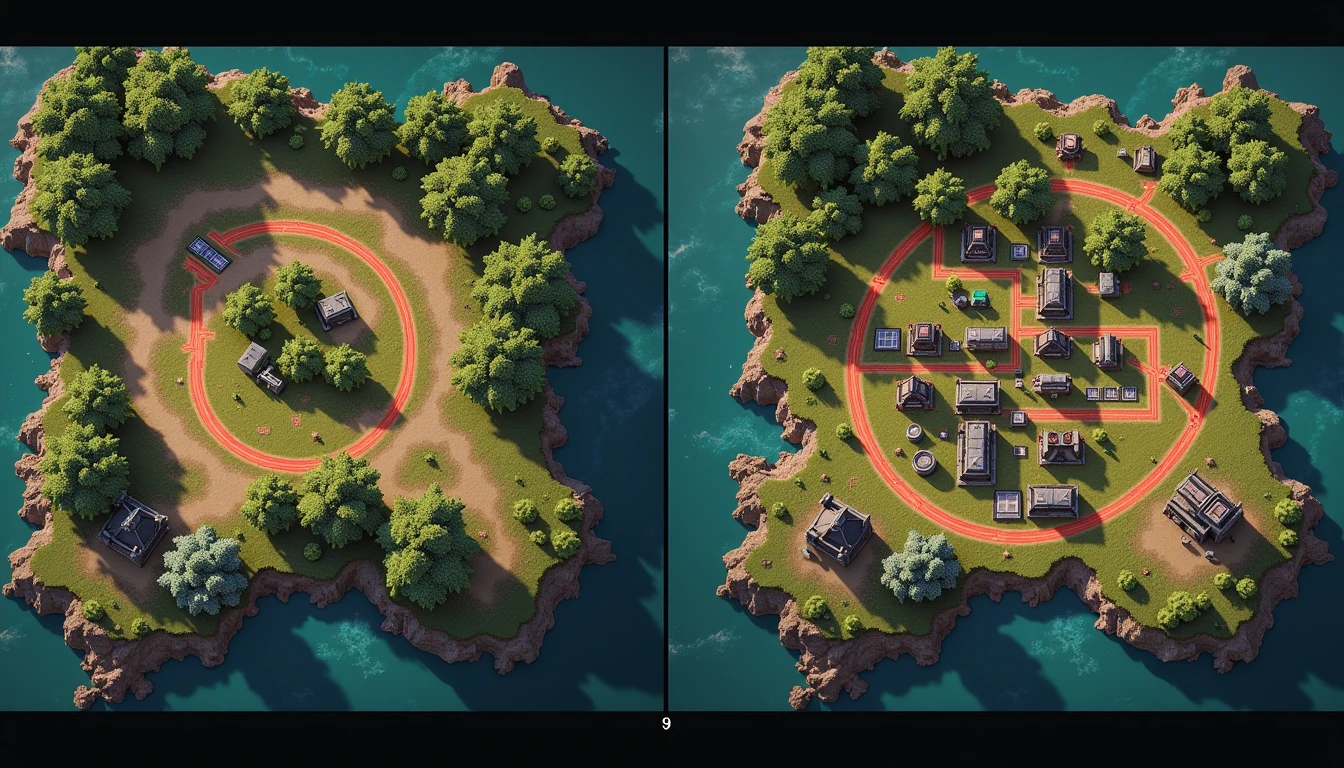
The first few hours of any survival crafting game are almost always enjoyable. There is new ground to cover, a fresh tool to unlock, a threat you have not learned to read yet. My honest evaluation does not start until around hour ten, when the loop has settled into whatever it is actually going to be. That is the moment I ask the question that decides whether a game keeps my weeknights: is this thing teaching me anything new, or is it simply asking for more of my time? The list of survival crafting games for adults that I actually finish is short precisely because most games fail that question somewhere in the middle.
The test has three parts, and none of them require a spreadsheet. I watch for new decisions arriving as I play, I pay attention to what failure costs me, and I check whether systems combine in ways the opening hours never spelled out. If all three come up empty by hour ten, I have learned the hard way that another ten hours will not fix it. Confusing "long" with "deep" is one of the most expensive mistakes a busy adult can make in this genre, because it usually ends with you walking away from progress you cannot get back. In practice, this test is also the most reliable method I know for how to avoid grinding in survival games — you notice the difference between friction that teaches and padding that merely stretches the clock.
The Depth Test I Run Around Hour Ten
The ten-hour mark matters because that is where the scaffolding comes down. By then, most games have handed you their core tools, and whatever is left is either a stack of systems that build on each other or a stretched version of the same loop. I have played survival games where hour eleven introduced a genuinely new way to think about my base. I have also played ones where hour eleven meant the same trip to the same forest with a slightly larger backpack.
To find out which kind I am in, I pause mid-session and sketch the loop on scrap paper. If I can draw the resource flow in under a minute and the drawing is a straight line, that tells me most of what I need to know. Chop wood, build wall, repeat. A straight line is not a system; it is a schedule. A map with branches — where one resource feeds a machine, the machine changes how I explore, and the exploration pulls in new threats — is a different animal entirely.
The Question I Write Down Instead of Searching For
I keep a notepad beside my keyboard, and when a game confuses me, I write the question down instead of searching for the answer in the first five minutes. It sounds like a small habit, but it changes how I judge games. If I sit with the confusion for an evening, I usually figure out whether the problem is mine or the game's — a distinction worth keeping when you have limited hours.
When I test a survival crafting game, the question that ends up on the notepad around hour ten is usually this: what would I do differently if I started over? If my answer genuinely changes — a different base location, a different order of unlocks, a different plan for the first thirty minutes — the game has layers worth climbing. If my answer is "the same thing, only faster," the game is asking me to repeat myself and calling it progression.
None of this means a simple loop is automatically a bad thing. Some of the survival games I enjoy most have straightforward loops and strong tension. The real problem is a game that insists repetition is depth and quietly asks you to keep investing in a payoff that never arrives.
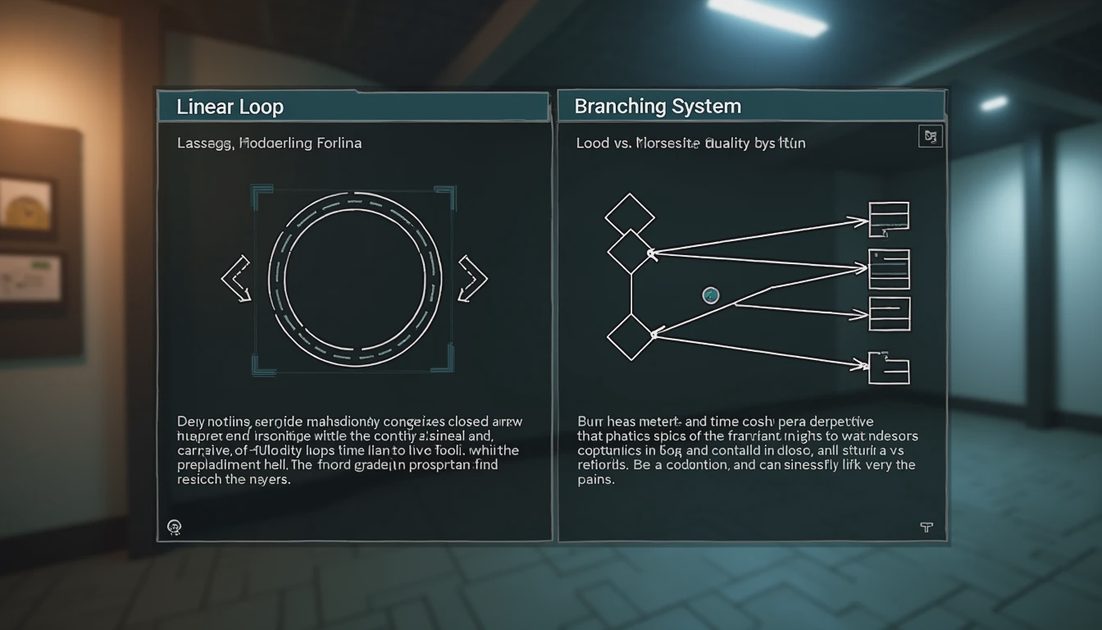
Signs a Survival Game Rewards Understanding
I judge a game in three places: what failure costs, what upgrades change, and what the optional systems do. When I die in a survival game that respects my attention, the failure teaches me something about the next attempt. When I die in a time-eater, the only lesson is that I need to walk back and do the same thing again.
The survival crafting games for adults that hold my attention for months tend to share one trait: choices carry consequences past the moment you make them. I still remember bases where a decision made in the first week still mattered in the third. That kind of reach is the difference between a real system and a built-in timer.
Here is the comparison I use when a friend asks for the difference:
Angle | A system that rewards understanding | A system that just eats time |
|---|---|---|
New information | Later unlocks change how earlier choices work | Later unlocks are the same task with larger numbers |
Failure | You see why you lost and adjust your plan | You lose progress and repeat identical steps |
Upgrades | Picking one path closes another door | Every upgrade adds numbers; nothing else changes |
Automation | Production frees you to attempt new kinds of work | Automation only shrinks waiting time on the same loop |
Side content | Optional areas test skills you already built | Optional areas hand out more loot and little else |
Most of the survival games I have walked away from land on the right column of that table in at least three rows. Once I see that pattern, I stop asking whether the game is well made and start asking whether it is well made for my schedule — the honest answer is usually no.
The Checklist to Run Before You Go Deeper
Here's what I'd do. Before committing a weekend to a survival crafting game, run it through a short checklist. You can complete it from reviews, a friend's description, or your own first sessions — the goal is to notice where the game intends to get its hours from.
Ask how the mid-game changes the early game, not how large the map is.
Look for descriptions of choices that still matter dozens of hours after you make them.
Find out what a death actually costs. If it costs your time more than your plan, that is a signal.
Check whether you can rebuild or respec, because experiments should not cost you ten hours.
Notice the difficulty curve. Do threats get harder because they are smarter, or because their numbers went up?
Picture your usual ninety-minute session. Would you end it at a natural stopping point, or somewhere in the middle of a grind?
In my experience, most survival crafting games for adults that fail this checklist fail it for the same reason: the middle stretch is where the design budget ran out. If your answers point toward a time gate, walk away without guilt. At its core, how to avoid grinding in survival games is a decision you make before you install the game, not a battle of willpower you fight during it.
When the Honest Answer Is No
When the test comes back negative, I uninstall and move on. Sunk cost is a trap that busy adults cannot afford. The hours you already spent taught you what kind of game this is, and that knowledge is the real return on your time, not the progress bar.
Give it one more session if it was close; a single mechanic sometimes clicks into place late. But when the pattern is clear, trust it. Your evenings are the scarcest resource in the house, and a survival game that only wants more of them is not earning them. Decide early, decide honestly, and move on to something that pays you back.