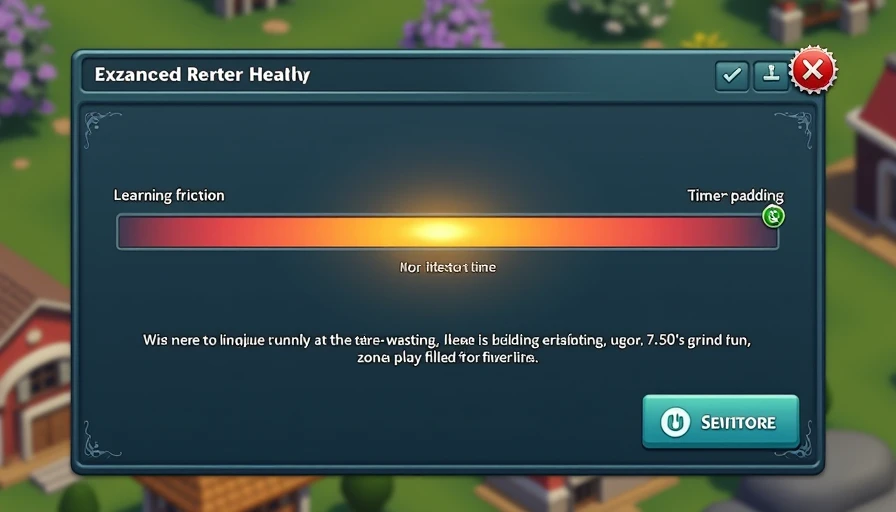
Ask three simulation game players what the word "grind" means and you will get three different answers. To one player it is the slow crawl of the early hours. To another it is repeating the same production step until their eyes glaze over. To me, the disagreement itself is the useful part, because it exposes what most grind arguments are really about: some repetition is teaching you the game, and some repetition is just charging you rent. The practical question — and the one behind how to avoid grinding in survival games, sims, or anything else you play for an hour a night — is where that line sits.
I have spent a lot of evenings in city builders, colony sims, farming games, and logistics puzzles, and my definition has settled into something simple. Grinding is reasonable when it produces a decision I have not made before. It is unreasonable when it only produces numbers. Everything in this article is really an unpacking of that one sentence.
Grinding Is Not One Thing
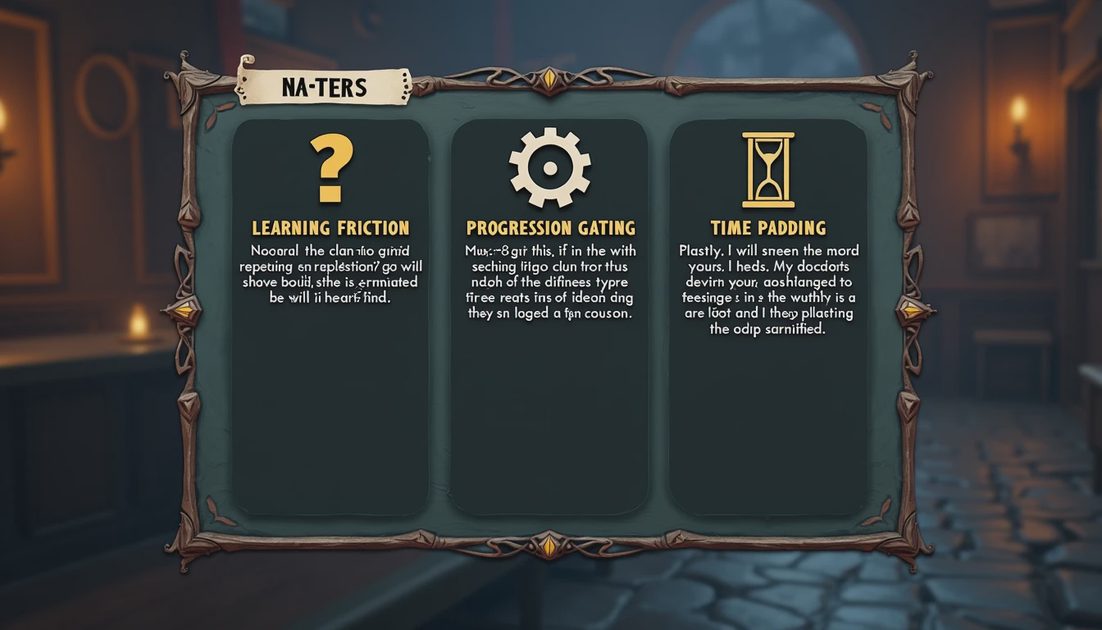
Before I can judge a grind, I split it into three separate things, because they serve completely different purposes and deserve completely different reactions.
Learning friction is the early stretch where I still do not know the systems and my mistakes are cheap. It disappears once I get competent, and it usually feels fine in hindsight.
Progression gating is the pace at which the game hands out new buildings, tools, or research. Good gating makes me feel like I am digesting each layer. Bad gating makes me feel like the game is afraid I will finish too quickly.
Time padding is activity that exists only to stretch play time. Nothing new is decided, nothing new is learned, and the only output is a number getting bigger.
The important discovery for me was that these three get constantly mixed together in discussions. When someone says a sim is too grindy, they usually mean padding, but the blame lands on gating, because gating is the visible structure. That conflation is also why generic advice about how to avoid grinding in survival games can feel useless when you carry it into a sim — you have to name the specific kind of grind before you can judge it.
The Spectrum from Necessary Friction to Padding
Once I have named the three kinds, I place the game on a spectrum. The left end of the spectrum is the friction that makes a sim feel like a real place with real consequences. The right end is the section of the map labeled "respect your time, please," where the activity exists for no reason other than slowing me down.
Here is the scale I run through when a game starts to feel repetitive:
Stage | What it feels like | My verdict |
|---|---|---|
Learning friction | I am new, my mistakes are cheap, and I visibly improve | Keep playing |
Gentle gating | New systems arrive a little faster than I can master them | Healthy pace |
Purposeful repetition | I repeat a task that funds a goal I chose myself | Borderline |
Time padding | Tasks repeat with no new decision attached | Reduce sessions |
Wasted hours | The activity exists only to delay progress | Put the game down |
The first two rows are not grind in the bad sense; they are the reasons a good sim can keep my attention for months. The fourth and fifth rows are where evenings start to die, because the game is asking for time and offering nothing but the passage of time in return.
The Diagnostic Questions I Ask
When a sim starts to feel like work, I ask four questions before I decide whether to quit or adjust my expectations. The answers decide how I spend my next few sessions:
Am I still making decisions I have not made before?
Did I choose this goal, or did the game assign it to me?
If I skipped this task, would I lose a meaningful option or just a number?
Would this activity still exist in a version of the game with no grind at all?
Answering these takes five minutes on a scrap of paper, and doing it honestly is how to avoid grinding in survival games and sims alike: you draw the line while you are calm, not while you are frustrated at the keyboard. When the answers point at padding, I stop scheduling the task and start asking whether the game has anything else to offer me this week.
What Reasonable Grind Actually Buys You
Reasonable grind is not a tax; it is tension. The reason a farming sim can make the same planting-and-harvest loop feel good for dozens of sessions is that each cycle contains a real decision — what to plant, what to sell, when to expand, how much to gamble on weather. Remove the decisions and the identical loop becomes a chore within an hour.
Most simulation game beginner tips focus on efficiency, spreadsheets, and squeezing the numbers dry. Mine is simpler: spend your early sessions noticing which repetitions hand you decisions and which ones hand you nothing. A game that keeps feeding you choices earns the repetition. A game that has stopped feeding you choices has stopped earning your evening.
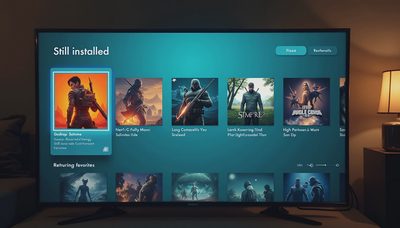
I learned this the slow way with a logistics sim that stayed installed for two months after it stopped being fun. The daily routine was identical, the output numbers kept climbing, and somewhere around week six I realized I had not made a real decision in three sessions. I had stopped playing and started maintaining. Once I named that, quitting took about ten minutes, and the next sim I bought passed my four questions before I ever reached the checkout.
Save your time for the fun stuff. If a sim still hands you decisions, forgive the repetition and keep it installed. If it has started charging you for time it has no intention of using, you already have permission to stop. The line is yours to draw — and the good part is that you can redraw it every single session.